Cabbage Red Tete Noire (Bag) – Franchi Sementi
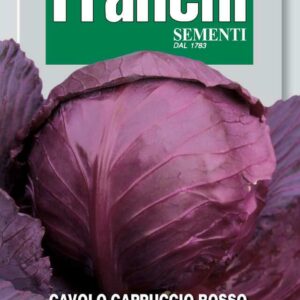
Cabeza Negra. Also known as Cavolo Cappuccio. (Red Cabbage). Solid red smooth leaf cabbage. Large head, good taste. 85 days. Best color if planted for fall harvest. 6 gram packet, approx. 1200 seeds. Approximately 190-300 seeds per gram.
V57 - Frost resistant. Firm, deep red. A Christmas favourite braised sweet and sour.
Approximate seeds quantity:@1500
Sow: from May - end July
Partnership plant: Chard, Cucumber, Bean, Lettuce, Pepper, Pea,
Tomato, Leek, Spinach.
What to sow after: Chicory, Bean, Endive, Lettuce, Pea, Leek,
Spinach, Lamb's lettuce.
Cabbage Copenhague (Bag) – Franchi Sementi
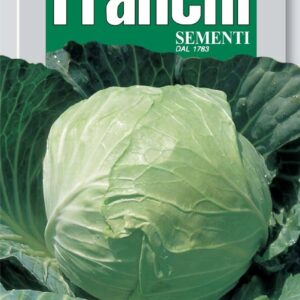
V14b - Mid-Early variety that produces grey/green round head. The head have a good dimension and it is close and wrap tightly.
Approximate seeds quantity:@1500
Sow: from May - July
Partnership plant: Chard, Cucumber, Bean, Lettuce, Pepper, Pea,
Tomato, Leek, Spinach.
What to sow after: Chicory, Bean, Endive, Lettuce, Pea, Leek,
Spinach, Lamb's lettuce.
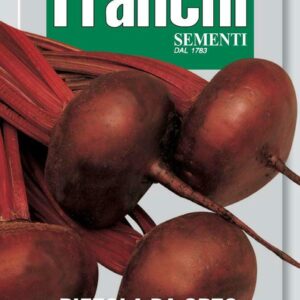
Beetroot Egitto Migliorata (Bag) – Franchi Sementi
Very flat red beet shaped like a cipolla onion. Excellent taste. Very sweet beet; no earthy taste to these. Nice red tops. Beautiful tops become dark bronze/red in cool weather. Ready in 55-60 or so days. 7 gram pack. Approximately 40-60 seeds per gram.
V10 - 'Dark Flat Egyption'. Early round variety. Semi flat of medium dimensions with purple red flesh. Dates to around 1850.
Approximate seeds quantity:@450
Sow: from March - June
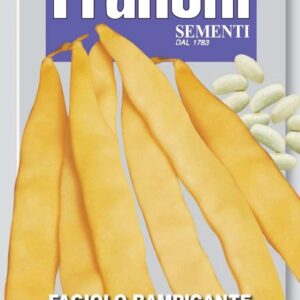
Bean Climbing Meraviglia di Venezia (Phaseolus vulgaris L.) (Bag) – Franchi Sementi
Climbing French Bean - Meraviglia di Venezia. The "100 gram" packet is actually 170 grams. Vigorous plant, heavy producer of up to 10 inch meaty light yellow roma type beans. White seed. No strings & good flavor. The bean salad using this and Supermarconi was a real hit. Like all pole beans, keep picking to encourage continued production. 55 or so days; very early for a pole bean. Vigorous climber needs support: use trellis, tripods or single poles at least 7' tall. Plant after soil has warmed up well since seeds are not treated. 3-4 seeds around base of each pole or 2 seeds/six inches for trellis. Thin to one/six inches for trellis, 2 plants for poles. 30 grams. Approx. 80 seeds. The 170 gram pack contains approx. 440 seeds.
*Heritage Variety* *Endangered Variety from the Slow Food register of varieties at risk, the 'Ark of Taste'* https://www.fondazioneslowfood.com/en/ark-of-taste-slow-food/meraviglia-di-venezia-bean/
Marvel of Venice Yellow French bean
B17 - This wide, meaty yellow French Bean is stringless. It is great hot as a vegetable, but it really comes into it's own in a bean salad dressed with Olive oil and balsamic vinegar from Modena.
Early variety with white seeds. The plant reach and height of 190cm, with pods about 20cm long and 3cm wide.
Weight: 30g
To be sown from April to July
Approximate seeds quantity: @ 150seeds
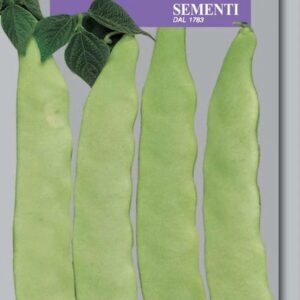
Bean Climbing French Smeraldo (Phaseolus vulgaris L.) (Bag) – Franchi Sementi
*Heritage Variety*
Mid/early white seeded variety. Produces numerous meaty and stringless pods .
Sow: from April - July
Plant height: 190cms
Pods: 24-26cm in length and up to 2cm wide
Partnership plant: Chard, Cauliflower, Cabbage, Cucumber,
Chicory and Radicchio, Lettuce, Aubergine, Radish.
What to sow after: Chard, Carrots, Cauliflower, Cabbage, Cucumber,
Chicory and Radicchio, Fennel, Endive, Lettuce, Aubergine,
Melon, Pepper, Tomato, Leek, Parsley, Radish, Spinach,
Lamb's lettuce, Courgette.
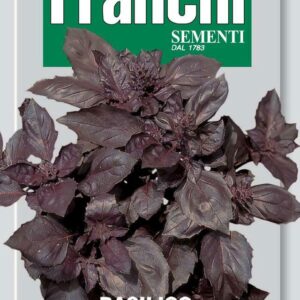
Basil Violetto Aromatico / Dark Opal (Ocimum basilicum L.) (Bag) – Franchi Sementi
Violetto Aromatico / Dark Opal basil. This is a really pretty basil. Nice color, good size plant similar in size and growth habit to Genovese basil. Good aroma and flavor. Will do ok in a pot, but does better outside in the garden. Consider using it as a decorative plant in place of flowers. A bed of red basil, Genovese basil and lettuce leaf basil is quite pretty. For transplants, start 6-7 weeks before set out date (10 days after last frost date), 5-6 seeds/cell and thin to two or three. Plant at 12 inch intervals. For direct seed, 6-7 seeds every 12 inches cover with 1/4 inch fine soil and keep watered until germination: 7-10 days. Thin to 2-3 plants per space.
Basil has approximately 600-650 seeds per gram.
*Heritage Variety*
Red Basil. This is a mid-early variety with vigorus plant. The leaves have a bright violet colour and a sweet intense perfume. Sweeter tasting than regular basil with a slight clove undertone.
Easy to grow and ideal for containers.
Approximate seeds quantity: @3200 seeds.
To be sown from March to July directly in the ground or all year long in a protected indoor system.
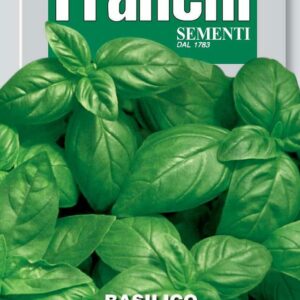
Basil Italiano Classico (Ocimum basilicum L.) (Bag) – Franchi Sementi
Italian Classic Basil. This sweet Genovese basil is our most popular variety. It is the same strain that made pesto famous worldwide. (Our Italian supplier, Franchi Seeds, calls it Italian Classic rather than Genovese because the region of Genoa got an Indicazione Geografica Protetta (IGP) trademark that limits the use of the name Genovese to basil grown in a certain area of Liguria; however, the seed is grown elsewhere in Italy and so cannot have the name Genovese within Italy. )
Whatever this basil is called, it's the best. This is the classic basil used for sauces, pesto, pizza, and just about everything else. Leaves are soft and fragrant with a delicious taste.
The seed count in a pack is enormous -- about 4,800 seeds. Why so much seed? Because in Italy, people like to pick basil very young, so they seed it repeatedly and just pull the entire plants when they are about 5-6 inches tall. In the U.S., most people grow a few plants and pick from them all summer long, so a packet of seeds lasts a long time. Basil seed, if kept cool and dry (but not in the refrigerator) will remain viable for up to 5 years. Try one of our seed storage tins for keeping extra seed.
Basil has approximately 600-650 seeds per gram.
FUSARIUM FREE - TESTED.
*Heritage Variety*
Basil Classico Italiano - This is the classic style basil which is also used for making 'pesto' but has a million other uses in the kitchen. The ideal windowsill herb too.
This is a mid-early variety producing vigorus plants. Easy to grow and perfect for containers.
Approximate seeds quantity: @4000 seeds.
To be sow from March to July directly on the ground and inside the rest of the year.
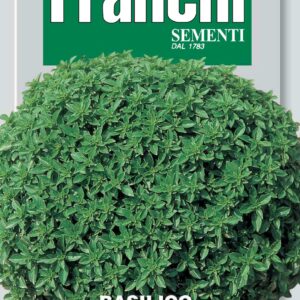
Basil Fine Verde Greek (Ocimum basilicum L.) (Bag) – Franchi Sementi
*Heritage Variety*
This is a mid-early variety producing bushes variety with small leaves and quite a strong flavor. This variety is easy to grow, especially in containers.
Super for making good basilly sauces and with Red Pear Franchi tomatoes.
Approximate seeds quantity:@4000.
To be sow from March to July directly on the ground and inside the rest of the year.
Basil Fine Nano Compatto a Palla (formerly Greco a Palla). This is a beautiful plant, a bush variety with a naturally round shape. It has small, bright green leaves. The flavor is intense and holds up well in tomato dishes. Use for flavoring or just leave some on a plate or in a jar in the kitchen for aroma and color.
It can be grown in a large pot. For transplants, start 5-6 seeds in a cell six or seven weeks before set out date which is ten or more days after last frost date. Thin to three or four. Set plants 12 inches apart. For direct seeding, 7-8 seeds every foot, thin to two or three. 5 gram packet, about 3,000 seeds.
Basil has approximately 600-650 seeds per gram.
1g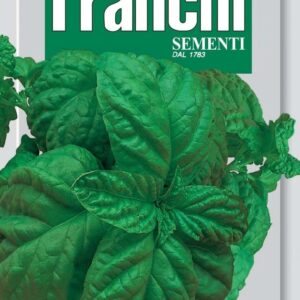
Basil Bolloso Napoletano (Ocimum basilicum L.) (Bag) – Franchi Sementi
Basil Napoletano. Big leaf basil. Dark green wrinkled leaves. Very intense flavor & aroma (unlike most big leaf types). Leaves are as big as your hand. Prefers full sun. 8 gram packet.
Basil has approximately 600-650 seeds per gram.
*Heritage Variety*
Featured on BBC GQT 2/3/12. Large basil with blistered leaves. This variety is only found in Naples and is highly prized for it's flavor. We keep the buffalo in this region and so traditionally it is used to wrap the large leaves around mozzarella balls and drizzle with olive oil. @4000.
Approximate seeds quantity:@4000
Sow: from March - July

Asparagus Of Argenteuils (Asparagus Officinalis) (Bag) – Franchi Sementi
*This variety is on the Slow Food 'Ark of Taste' which means it is endangered. By growing it you are supporting Biodiversity. https://www.fondazioneslowfood.com/en/ark-of-taste-slow-food/argenteuil-asparagus/
V1 - Early variety with tasty, tender tips. Forms the crowns the first year and starts to produce asparagus the following year. The first year, these should be left, the 2nd year cut half and the third year, cut all. Belle dArgenteuil asparagus is white with tips coloured from pink to purple; it is very aromatic, slightly bitter. Its stem is firm and tender, and its flavour is very delicate. White asparagus had to wait until 1755 before overtaking green asparagus, which grows in the open air. Developed in 1830 by Louis Lhérault, the improved late-growing Argenteuil asparagus variety travelled the world over in the 19th century. This new variety is known for its precociousness, its large size, its productivity, its tenderness (after peeling) and its largely white colour due to the fact it grows entirely underground, in the dark, which prevents it from flowering. Growing sometimes to 25cm in length and 3 to 6cm in diameter, it was highly appreciated by Parisian gourmands, who preferred it meaty. This vegetable has been very successful and a sort of craze: 400,000 were harvested in 1867, more than a million in 1900. They were awarded medals and rewarded in universal shows, most notably in the Paris World Fair in 1878. The “Belle dArgenteuil” as it is called, even appeared on the menu of the first class passengers on the Titanic on 14 April 1912 (in a cold asparagus salad vinaigrette) shortly before it sank. The purple asparagus such as the “Belle de Argenteuil” is planted in a very special way: different from green asparagus in that as it grows, it is covered up to eliminate being exposed to light so it can develop and remain tender instead of flowering. It is picked with a trowel (also used for endives) while still underground, whereas green asparagus is cut with scissors. Asparagus is a plant that grows in the night and must be harvested very early in the morning to keep its freshness. Its season lasts 3 months more or less, usually from 15 March to 15 June. Asparagus was a dish highly appreciated by Louis XIV–who ate them in strips with a soft-boiled egg–and were very frequently on the table at Versailles, especially in winter, obliging his head gardener La Quintaine to grow them in a hothouse with a “hot bed” made from manure. Historically, Argenteuil had been a land of vineyards since ancient times, vines that were highly developed in the 12th century thanks to the Notre Dame abbey monks. If the vines enriched the town – they took up more than 3,000 hectares in the 18th century – the development of the railway transported the competitive, often better quality, wines. Then arrived the diseases, notably phylloxera, and the troop mobilisations of the First World War diminished this culture. Some Argenteuil inhabitants, whose vineyards were decimated, saw their fortunes turn around by planting asparagus instead. Simple recipes were developed to highlight the delicacy, notably poached eggs Argenteuil, or Argenteuil soup made with the shoots while the tips were used in another preparation. For the entire 19th and 20th centuries, asparagus enjoyed a prominent place on the daily menus of the middle classes, and porcelain and ceramic producers of the day made services dedicated to this vegetable, at the same time France was the number one asparagus producer in Europe. After 1900, with the appearance of diseases and especially the spread of industrial activity, the Argenteuil asparagus production diminished. Today the Argenteuil asparagus variety has been “polluted” by cross breeding with other varieties, and often the fat, purple asparagus called “Argenteuil” is no longer grown but is a hybrid of the Argenteuil variety. Growing asparagus is very demanding: five years are needed from planting the seeds to the first harvest, and during the 10 years they produce, 3.5 tons are harvested per hectare. A vegetable typical of Ile-de-France, the sandy soil in the loop of the Seine (Argenteuil, Corbeil) would be particularly beneficial to it. There are not many market farmers who grow the Argenteuil variety. One of them, Laurent Berrurier, tells us he grows on average 1 ton per year.
Approximate seeds quantity:@200
Sow: from March - June
Arparagus Precoce d'Argenteuil. Early. Light green big spears with purplish scales. Asparagus beds produce for 20 or more years. Easy to grow; rust resistance. These are seeds; USDA will not allow import of root stock. Starting from seed means it takes an additional year to get your bed productive. To start plants, sow seed in a small furrow; place seeds 1 inch deep; space rows 12 inches. Thin to 5 inches. The next year, move them to a permanent bed. Make sure you have prepared the area well (dug deep, made any soil amendments). 2.5 gram packet.
Asparagus seed packets have approximately 24-50 seeds per gram.
1g