

Seeds and Seedlings
Showing 13–24 of 80 resultsSorted by latest
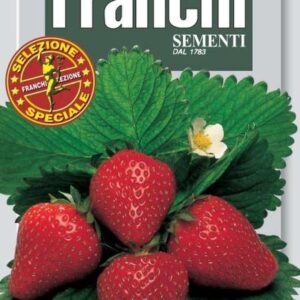
Strawberry Alpine (Fragaria Vesca L.) (Bag) – Franchi Sementi
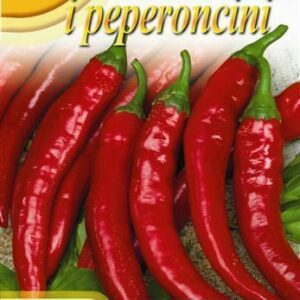
Pepper Chilli Piccante Cayenna (Capsicum annuum L.) (Bag) – Franchi Sementi

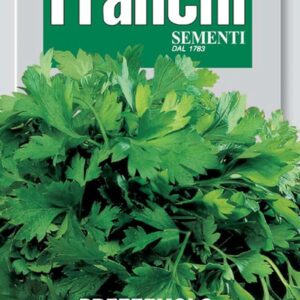
Parsley Gigante di Napoli (Petroselinum crispum Miller) (Bag) – Franchi Sementi
Parsley Giant of Naples. Very large flat-leaf variety from Naples with incredible flavor. Plants are large with strong, long stalks and large leaves.
Start from seed or transplants. Leaves grow back stronger after cutting. 75-80 days. Very cold hardy. Will overwinter in most areas. 12 gram packet, about 5,000 seeds. Approximately 500-600 seeds per gram.
Note, the organic version, is a different variety, Gigante d'Italia. This is Gigante di Napoli.
*Heritage variety*
This is simply the best of all the parsleys, really tasty, with huge leaves, a gastronomic delight, typical of the Naples region. Parsley is one of the staples of Italian cuisine, and has many uses in the kitchen. Use it to make salsa verde, the other ingredients being garlic, capers, anchovies, gherkins, mustard, red wine vinegar, olive oil, salt and pepper and basil and mint too if you fancy. In Biella, Italy, where salsa verde originates, cooked egg yolk is added too. Delicious. Chop, stir and serve with seafood, eggs or baby new potatoes. The Romans used to chew parsley to help prevent bad breath too. Quite a good plan with all that garlic around.
Sow direct outside from April to September, 1cm deep. It can take several weeks to germinate, so dont despair! Alternatively sow in modules of seed compost on a sunny windowsill so you can keep an eye on it and plant out when large enough to handle. Parsley resists cold reasonably well, and regular cutting makes the plant stronger.
Oriental Leaves Mix (Bag) – Franchi Sementi
Onion Red Of Genova (Allium cepa L.) (Bag) – Franchi Sementi
Onion di Genova. Genovese. Also called bassano. Mild red cipolla type, flatter than Savona. Will grow 2 inches across, but can be picked younger. Like most Italian onions, this is a 'long day' onion and will not develop large heads if grown south of 36 degrees latitude. From transplants or direct seed. Plant close, thin and use in salad, on skewers, etc. 2.5 gram packet. Approximately 250-400 seeds per gram.
*Heritage Variety*
This variety is on the Slow Food 'Ark of Taste' which means it is endangered. By using Franchi seeds you are supporting Biodiversity https://www.fondazioneslowfood.com/en/ark-of-taste...
S6 - Classic flat red Onion used widely across Italy. Sweet tasting, so can also be used raw in salads, as well as for cooking.
The Red Genovese onion is a spherical onion, lightly flattened at the poles. It is mainly cultivated in Val Graveglia, in the inland areas of Chiavari, Lavagna and Sestri Levante in eastern Liguria. It is also known by the name of Zerli onion, from the name of a town in the area. The bulb is of medium size and quite sweet. It is very appreciated and is eaten mainly raw or as an ingredient in the savory tarts traditional to this area of Liguria, like the baciocca, made with potatoes and lard. The harvest is usually done in two phases: cipollotto (young, fresh onion) and in its mature form. This is the result of a traditional cultural practice of seeding a high number of onions per square meter at the time of transplant, then gradually thinning the harvest. In April and May, it is possible to eat the greens of the onion, leaving the bulb to mature in the soil to be collected in June or July, at which point it can be harvested for cooking. The onion was considered an excessively nutrient-draining crop, so much so that in some land lease contracts it was listed as a prohibited crop. This was because of the use of fertilizers that did not include nitrogen, and for this reason it should be preceded in fields by a legume crop. Today, while it is appreciated in its production zone, it is little known in neighboring areas. Therefore, many are unaware of its unique culinary properties and do not seek the variety out compared to other types of red onions, or give any economic reason to encourage farmers to cultivate this variety.
Approximate seeds quantity:@840
Sow: from February -March and harvest July - August.