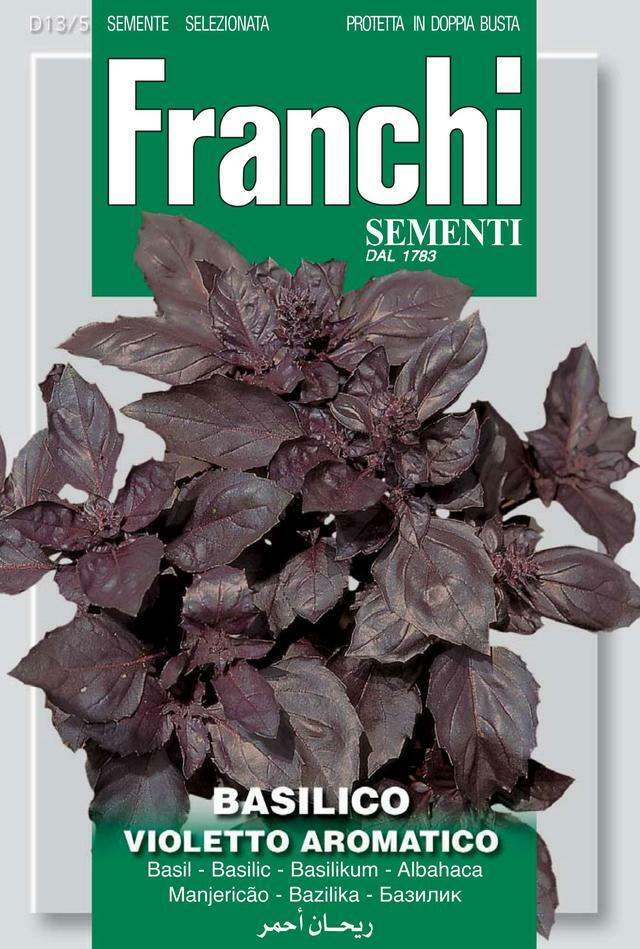
Basil Violetto Aromatico / Dark Opal (Ocimum basilicum L.) (Bag) – Franchi Sementi
$2.00
Violetto Aromatico / Dark Opal basil. This is a really pretty basil. Nice color, good size plant similar in size and growth habit to Genovese basil. Good aroma and flavor. Will do ok in a pot, but does better outside in the garden. Consider using it as a decorative plant in place of flowers. A bed of red basil, Genovese basil and lettuce leaf basil is quite pretty. For transplants, start 6-7 weeks before set out date (10 days after last frost date), 5-6 seeds/cell and thin to two or three. Plant at 12 inch intervals. For direct seed, 6-7 seeds every 12 inches cover with 1/4 inch fine soil and keep watered until germination: 7-10 days. Thin to 2-3 plants per space.
Basil has approximately 600-650 seeds per gram.
*Heritage Variety*
Red Basil. This is a mid-early variety with vigorus plant. The leaves have a bright violet colour and a sweet intense perfume. Sweeter tasting than regular basil with a slight clove undertone.
Easy to grow and ideal for containers.
Approximate seeds quantity: @3200 seeds.
To be sown from March to July directly in the ground or all year long in a protected indoor system.
1g
Violetto Aromatico / Dark Opal basil. This is a really pretty basil. Nice color, good size plant similar in size and growth habit to Genovese basil. Good aroma and flavor. Will do ok in a pot, but does better outside in the garden. Consider using it as a decorative plant in place of flowers. A bed of red basil, Genovese basil and lettuce leaf basil is quite pretty. For transplants, start 6-7 weeks before set out date (10 days after last frost date), 5-6 seeds/cell and thin to two or three. Plant at 12 inch intervals. For direct seed, 6-7 seeds every 12 inches cover with 1/4 inch fine soil and keep watered until germination: 7-10 days. Thin to 2-3 plants per space.
Basil has approximately 600-650 seeds per gram.
*Heritage Variety*
Red Basil. This is a mid-early variety with vigorus plant. The leaves have a bright violet colour and a sweet intense perfume. Sweeter tasting than regular basil with a slight clove undertone.
Easy to grow and ideal for containers.
Approximate seeds quantity: @3200 seeds.
To be sown from March to July directly in the ground or all year long in a protected indoor system.
1g
| Brands | Franchi Sementi |
|---|
Related products
Chicory Barba di Cappuccino-Monk’s Beard (Bag) – Franchi Sementi
Monks' Beard Chicory. Long thick stems which are white on the bottom and green above. Green leaves with serrated edges. 70-75 days. Best in Fall. Use in salads or cook. Space at 4 inches between plants, 8-10 inches between rows. 12 gram pack. Approximately 600-900 seeds per gram.
*Heritage Variety*
R29 - The Cappuccini are missionary monks and literally translated, this variety is called "Cappuccini" Friars Beard.
Approximate seeds quantity:@6000
Sow: from May - August.
Partnership plant: Carrot, Bean, Fennel, Lettuce, Pepper,
Tomato.
What to sow after: Cauliflower, Cabbage, Cucumber, Bean,
Aubergine, Melon, Pepper, Pea, Tomato, Radish, Courgette.
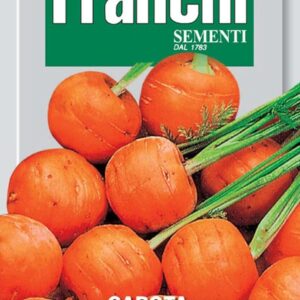
Carrot Parisier Markt (Daucus Carota) (Bag) – Franchi Sementi
Carrot Pariser Market 4. Small, round specialty type carrot. Tender and crunchy. Really pretty carrot and very popular in French markets. Children love these little round carrots as well. Does well anywhere, but really good and quick with heavy clay soil. Fairly early. 6 gram pack. Approximately 400-1200 seeds per gram.
This variety is on the Slow Food Ark of Taste which means it is endangered. By using Franchi seeds you are supporting BioDiversity. https://www.fondazioneslowfood.com/en/ark-of-taste-slow-food/paris-round-carrot/
V18 - Featured on BBC Gardeners World 20/04/07. Round French Parisian carrots with good flavour. It's a classic case of the carrot changing to suit it's environment, and is basically a clay carrot. Easy to grow in containers and not as prone to carrot root fly. Sow in the Spring as you can get quite a late sowing. Also great to use in Indoor Farming systems and for Urban gardening in containers.The carrot (Daucus carota) is also called “Pastenade”, probably arrived on French tables in the 14th century, but at the outset it had little in common with the carrot we know today, since it was white, tenderer and mostly more fibrous. It took until the 18th and the middle of the 19th century for the orange varieties – coming from Afghanistan – to be more and more appreciated, probably for its tenderness. In the beginning it was known as a “lower class” vegetable, reserved for the common people, historically a very consumed vegetable, and still the second most eaten vegetable in France today. The Paris market carrot is a small round one (2-4cm in diameter) of the Grelot type that is sought after for its tenderness and sweetness. It is a very early carrot, fast-growing and preserves well; it can be sown all year round, and especially in spring and end of summer. This variety grows on the surface of the soil, and it also prefers sandy to clayey but not compact soil. Some people attribute a honey flavour to it; when used in the kitchen, it is often prized in part for what sets it apart: its unconventional shape. Carrots are inseparable from the popular stew, beef-carrots and also Vichy carrots, created in the 16th and 17th centuries and cooked in Vichy thermal water. Like all ancient vegetable varieties, the Paris round carrot has a low yield, a surprising aspect that can make it difficult to use. Thus it has been replaced by more productive hybrids that often have no heart (or at least a very thin one) like the Nantes or Touchon varieties. There are not many market farmers who grow it. One of them, Laurent Berrurier, tells us he grows on average 500 bunches per year (about 450 kilos).
Approximate seeds quantity:@7000
Sow: from February - July
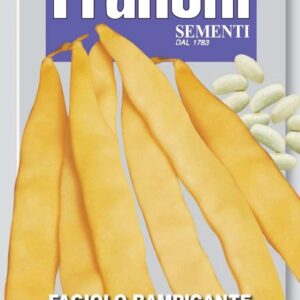
Bean Climbing Meraviglia di Venezia (Phaseolus vulgaris L.) (Bag) – Franchi Sementi
Climbing French Bean - Meraviglia di Venezia. The "100 gram" packet is actually 170 grams. Vigorous plant, heavy producer of up to 10 inch meaty light yellow roma type beans. White seed. No strings & good flavor. The bean salad using this and Supermarconi was a real hit. Like all pole beans, keep picking to encourage continued production. 55 or so days; very early for a pole bean. Vigorous climber needs support: use trellis, tripods or single poles at least 7' tall. Plant after soil has warmed up well since seeds are not treated. 3-4 seeds around base of each pole or 2 seeds/six inches for trellis. Thin to one/six inches for trellis, 2 plants for poles. 30 grams. Approx. 80 seeds. The 170 gram pack contains approx. 440 seeds.
*Heritage Variety* *Endangered Variety from the Slow Food register of varieties at risk, the 'Ark of Taste'* https://www.fondazioneslowfood.com/en/ark-of-taste-slow-food/meraviglia-di-venezia-bean/
Marvel of Venice Yellow French bean
B17 - This wide, meaty yellow French Bean is stringless. It is great hot as a vegetable, but it really comes into it's own in a bean salad dressed with Olive oil and balsamic vinegar from Modena.
Early variety with white seeds. The plant reach and height of 190cm, with pods about 20cm long and 3cm wide.
Weight: 30g
To be sown from April to July
Approximate seeds quantity: @ 150seeds
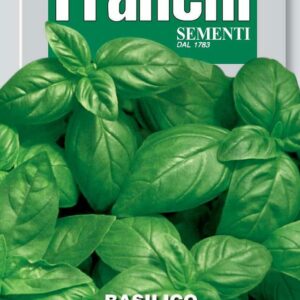
Basil Italiano Classico (Ocimum basilicum L.) (Bag) – Franchi Sementi
Italian Classic Basil. This sweet Genovese basil is our most popular variety. It is the same strain that made pesto famous worldwide. (Our Italian supplier, Franchi Seeds, calls it Italian Classic rather than Genovese because the region of Genoa got an Indicazione Geografica Protetta (IGP) trademark that limits the use of the name Genovese to basil grown in a certain area of Liguria; however, the seed is grown elsewhere in Italy and so cannot have the name Genovese within Italy. )
Whatever this basil is called, it's the best. This is the classic basil used for sauces, pesto, pizza, and just about everything else. Leaves are soft and fragrant with a delicious taste.
The seed count in a pack is enormous -- about 4,800 seeds. Why so much seed? Because in Italy, people like to pick basil very young, so they seed it repeatedly and just pull the entire plants when they are about 5-6 inches tall. In the U.S., most people grow a few plants and pick from them all summer long, so a packet of seeds lasts a long time. Basil seed, if kept cool and dry (but not in the refrigerator) will remain viable for up to 5 years. Try one of our seed storage tins for keeping extra seed.
Basil has approximately 600-650 seeds per gram.
FUSARIUM FREE - TESTED.
*Heritage Variety*
Basil Classico Italiano - This is the classic style basil which is also used for making 'pesto' but has a million other uses in the kitchen. The ideal windowsill herb too.
This is a mid-early variety producing vigorus plants. Easy to grow and perfect for containers.
Approximate seeds quantity: @4000 seeds.
To be sow from March to July directly on the ground and inside the rest of the year.
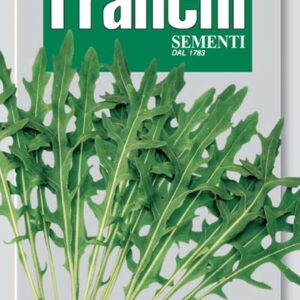
Arugula Selvatica or Wild Rocket (Diplotaxis tenuifollia)(Bag) – Franchi Sementi
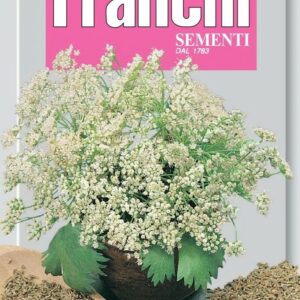
Anise (Bag) – Franchi Sementi
Annual plant easy to grow that required a sunny position. At the start of august, when the plant is flowering, remove the flowers which are drying out to facilitate later harvest of the fruits which are used to flavour dishes, sweets and liqueurs and have a strong aniseed flavour. Sow Spring and early summer.
Approximate seeds quantity:@4000
Sow: from full sun March - May
Anise. Lovely plant that needs a lot of heat and prefers full sun. Start seeds indoors 10 weeks before last frost; set outside when weather is warm and settled, trying not to disturb roots. Space 6" apart. Flowers in late summer. For anise seeds, cut stems, hang & collect seeds when dry.