
Onion Red Of Genova (Allium cepa L.) (Bag) – Franchi Sementi
$2.00
Onion di Genova. Genovese. Also called bassano. Mild red cipolla type, flatter than Savona. Will grow 2 inches across, but can be picked younger. Like most Italian onions, this is a ‘long day’ onion and will not develop large heads if grown south of 36 degrees latitude. From transplants or direct seed. Plant close, thin and use in salad, on skewers, etc. 2.5 gram packet. Approximately 250-400 seeds per gram.
*Heritage Variety*
This variety is on the Slow Food ‘Ark of Taste’ which means it is endangered. By using Franchi seeds you are supporting Biodiversity https://www.fondazioneslowfood.com/en/ark-of-taste…
S6 – Classic flat red Onion used widely across Italy. Sweet tasting, so can also be used raw in salads, as well as for cooking.
The Red Genovese onion is a spherical onion, lightly flattened at the poles. It is mainly cultivated in Val Graveglia, in the inland areas of Chiavari, Lavagna and Sestri Levante in eastern Liguria. It is also known by the name of Zerli onion, from the name of a town in the area. The bulb is of medium size and quite sweet. It is very appreciated and is eaten mainly raw or as an ingredient in the savory tarts traditional to this area of Liguria, like the baciocca, made with potatoes and lard. The harvest is usually done in two phases: cipollotto (young, fresh onion) and in its mature form. This is the result of a traditional cultural practice of seeding a high number of onions per square meter at the time of transplant, then gradually thinning the harvest. In April and May, it is possible to eat the greens of the onion, leaving the bulb to mature in the soil to be collected in June or July, at which point it can be harvested for cooking. The onion was considered an excessively nutrient-draining crop, so much so that in some land lease contracts it was listed as a prohibited crop. This was because of the use of fertilizers that did not include nitrogen, and for this reason it should be preceded in fields by a legume crop. Today, while it is appreciated in its production zone, it is little known in neighboring areas. Therefore, many are unaware of its unique culinary properties and do not seek the variety out compared to other types of red onions, or give any economic reason to encourage farmers to cultivate this variety.
Approximate seeds quantity:@840
Sow: from February -March and harvest July – August.
1g
Onion di Genova. Genovese. Also called bassano. Mild red cipolla type, flatter than Savona. Will grow 2 inches across, but can be picked younger. Like most Italian onions, this is a ‘long day’ onion and will not develop large heads if grown south of 36 degrees latitude. From transplants or direct seed. Plant close, thin and use in salad, on skewers, etc. 2.5 gram packet. Approximately 250-400 seeds per gram.
*Heritage Variety*
This variety is on the Slow Food ‘Ark of Taste’ which means it is endangered. By using Franchi seeds you are supporting Biodiversity https://www.fondazioneslowfood.com/en/ark-of-taste…
S6 – Classic flat red Onion used widely across Italy. Sweet tasting, so can also be used raw in salads, as well as for cooking.
The Red Genovese onion is a spherical onion, lightly flattened at the poles. It is mainly cultivated in Val Graveglia, in the inland areas of Chiavari, Lavagna and Sestri Levante in eastern Liguria. It is also known by the name of Zerli onion, from the name of a town in the area. The bulb is of medium size and quite sweet. It is very appreciated and is eaten mainly raw or as an ingredient in the savory tarts traditional to this area of Liguria, like the baciocca, made with potatoes and lard. The harvest is usually done in two phases: cipollotto (young, fresh onion) and in its mature form. This is the result of a traditional cultural practice of seeding a high number of onions per square meter at the time of transplant, then gradually thinning the harvest. In April and May, it is possible to eat the greens of the onion, leaving the bulb to mature in the soil to be collected in June or July, at which point it can be harvested for cooking. The onion was considered an excessively nutrient-draining crop, so much so that in some land lease contracts it was listed as a prohibited crop. This was because of the use of fertilizers that did not include nitrogen, and for this reason it should be preceded in fields by a legume crop. Today, while it is appreciated in its production zone, it is little known in neighboring areas. Therefore, many are unaware of its unique culinary properties and do not seek the variety out compared to other types of red onions, or give any economic reason to encourage farmers to cultivate this variety.
Approximate seeds quantity:@840
Sow: from February -March and harvest July – August.
1g
Related products
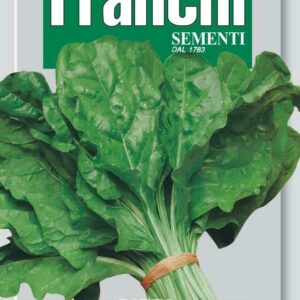
Chard Costa Verde Aka ‘Perpetual Spinach’ or Spinach Beet (Bag) – Franchi Sementi
Chard Verde da Taglio. Green cut & come again. Very thin stems, incredibly sweet & tender leaves. Harvest outer leaves or simply cut the entire plant as it will regrow. Tastes as good as spinach. Spring, summer & fall; will overwinter in zone 5 in an unheated greenhouse or with some protection. 7 gram packet. Approximately 40-60 seeds per gram.
*Heritage Variety*
Light green, smooth leaves which are cooked liked spinach. If you like to eat the legs of the chard then we recommend the Swiss chard above as they are larger. This variety can be harvested 1.5 months later than Swiss Chard however. Grows again quickly after cutting and commonly called Perpetual Spinach although it is not a true spinach it doesn't bolt like spinach and goes on and on or spinach beet bearing in mind that this variety resembles spinach more than chard but is a beet (related to beetroot!).
Approximate seeds quantity:@500
Sow: from March - mid September
Partnership plant: Carrots, Cauliflower, Cabbage, Bean, Radish,
What to sow after: Cauliflower,Cucumber, Chicory, Bean,
Endive, Lettuce, Melon, Pea,Leek, Radish, Courgette.
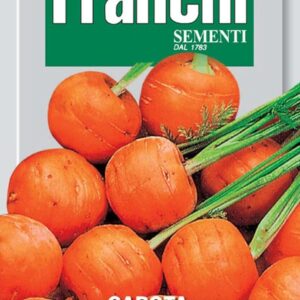
Carrot Parisier Markt (Daucus Carota) (Bag) – Franchi Sementi
Carrot Pariser Market 4. Small, round specialty type carrot. Tender and crunchy. Really pretty carrot and very popular in French markets. Children love these little round carrots as well. Does well anywhere, but really good and quick with heavy clay soil. Fairly early. 6 gram pack. Approximately 400-1200 seeds per gram.
This variety is on the Slow Food Ark of Taste which means it is endangered. By using Franchi seeds you are supporting BioDiversity. https://www.fondazioneslowfood.com/en/ark-of-taste-slow-food/paris-round-carrot/
V18 - Featured on BBC Gardeners World 20/04/07. Round French Parisian carrots with good flavour. It's a classic case of the carrot changing to suit it's environment, and is basically a clay carrot. Easy to grow in containers and not as prone to carrot root fly. Sow in the Spring as you can get quite a late sowing. Also great to use in Indoor Farming systems and for Urban gardening in containers.The carrot (Daucus carota) is also called “Pastenade”, probably arrived on French tables in the 14th century, but at the outset it had little in common with the carrot we know today, since it was white, tenderer and mostly more fibrous. It took until the 18th and the middle of the 19th century for the orange varieties – coming from Afghanistan – to be more and more appreciated, probably for its tenderness. In the beginning it was known as a “lower class” vegetable, reserved for the common people, historically a very consumed vegetable, and still the second most eaten vegetable in France today. The Paris market carrot is a small round one (2-4cm in diameter) of the Grelot type that is sought after for its tenderness and sweetness. It is a very early carrot, fast-growing and preserves well; it can be sown all year round, and especially in spring and end of summer. This variety grows on the surface of the soil, and it also prefers sandy to clayey but not compact soil. Some people attribute a honey flavour to it; when used in the kitchen, it is often prized in part for what sets it apart: its unconventional shape. Carrots are inseparable from the popular stew, beef-carrots and also Vichy carrots, created in the 16th and 17th centuries and cooked in Vichy thermal water. Like all ancient vegetable varieties, the Paris round carrot has a low yield, a surprising aspect that can make it difficult to use. Thus it has been replaced by more productive hybrids that often have no heart (or at least a very thin one) like the Nantes or Touchon varieties. There are not many market farmers who grow it. One of them, Laurent Berrurier, tells us he grows on average 500 bunches per year (about 450 kilos).
Approximate seeds quantity:@7000
Sow: from February - July
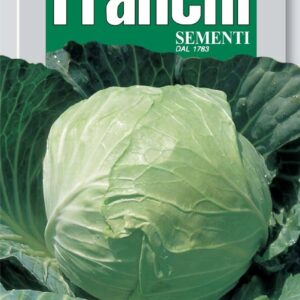
Cabbage Copenhague (Bag) – Franchi Sementi
V14b - Mid-Early variety that produces grey/green round head. The head have a good dimension and it is close and wrap tightly.
Approximate seeds quantity:@1500
Sow: from May - July
Partnership plant: Chard, Cucumber, Bean, Lettuce, Pepper, Pea,
Tomato, Leek, Spinach.
What to sow after: Chicory, Bean, Endive, Lettuce, Pea, Leek,
Spinach, Lamb's lettuce.
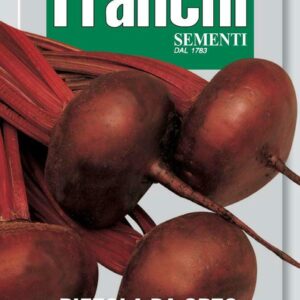
Beetroot Egitto Migliorata (Bag) – Franchi Sementi
Very flat red beet shaped like a cipolla onion. Excellent taste. Very sweet beet; no earthy taste to these. Nice red tops. Beautiful tops become dark bronze/red in cool weather. Ready in 55-60 or so days. 7 gram pack. Approximately 40-60 seeds per gram.
V10 - 'Dark Flat Egyption'. Early round variety. Semi flat of medium dimensions with purple red flesh. Dates to around 1850.
Approximate seeds quantity:@450
Sow: from March - June
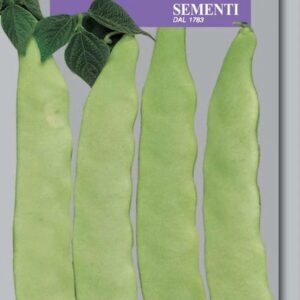
Bean Climbing French Smeraldo (Phaseolus vulgaris L.) (Bag) – Franchi Sementi
*Heritage Variety*
Mid/early white seeded variety. Produces numerous meaty and stringless pods .
Sow: from April - July
Plant height: 190cms
Pods: 24-26cm in length and up to 2cm wide
Partnership plant: Chard, Cauliflower, Cabbage, Cucumber,
Chicory and Radicchio, Lettuce, Aubergine, Radish.
What to sow after: Chard, Carrots, Cauliflower, Cabbage, Cucumber,
Chicory and Radicchio, Fennel, Endive, Lettuce, Aubergine,
Melon, Pepper, Tomato, Leek, Parsley, Radish, Spinach,
Lamb's lettuce, Courgette.