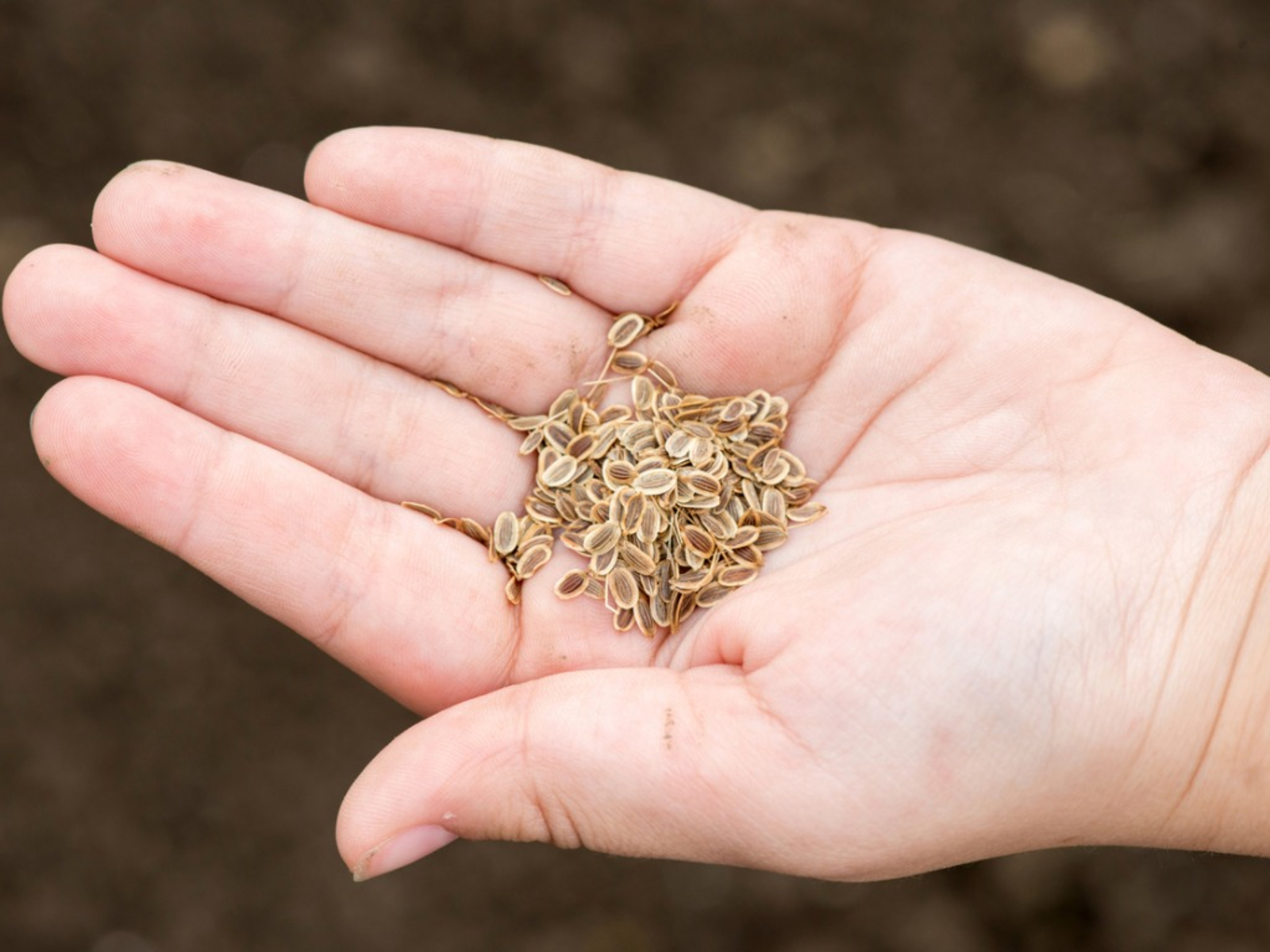
Carrot Seeds (Bag) – Nature by Marc Beyrouthy
$2.00
Related products
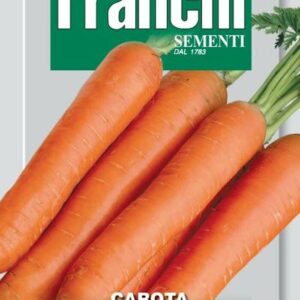
Carrot Touchon (Daucus Carota) (Bag) – Franchi Sementi
Carrot Touchon. An old French variety of superb quality and flavor ready in 65 days. 8 gram pack. 3,000 seeds. Approximately 400-1200 seeds per gram.
Carrot Touchon – this is an old French variety of superb quality and flavour.
Ready in 65 days, this plant produces roots about 17cm long, crunchy and tender.
Easy to grow and vigourous.
Approximate seeds quantity:@4000
Sow: from Spring/Summer
Partnership plant: Chard, Chicory, Lettuce, Pea, Tomato,
Leek, Radish, Spinach.
What to sow after: Cucumber, Chicory, Bean, Endive, Lettuce,
Melon, Pea, Radish, Courgette.
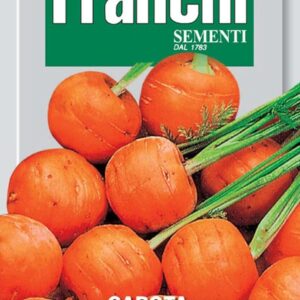
Carrot Parisier Markt (Daucus Carota) (Bag) – Franchi Sementi
Carrot Pariser Market 4. Small, round specialty type carrot. Tender and crunchy. Really pretty carrot and very popular in French markets. Children love these little round carrots as well. Does well anywhere, but really good and quick with heavy clay soil. Fairly early. 6 gram pack. Approximately 400-1200 seeds per gram.
This variety is on the Slow Food Ark of Taste which means it is endangered. By using Franchi seeds you are supporting BioDiversity. https://www.fondazioneslowfood.com/en/ark-of-taste-slow-food/paris-round-carrot/
V18 - Featured on BBC Gardeners World 20/04/07. Round French Parisian carrots with good flavour. It's a classic case of the carrot changing to suit it's environment, and is basically a clay carrot. Easy to grow in containers and not as prone to carrot root fly. Sow in the Spring as you can get quite a late sowing. Also great to use in Indoor Farming systems and for Urban gardening in containers.The carrot (Daucus carota) is also called “Pastenade”, probably arrived on French tables in the 14th century, but at the outset it had little in common with the carrot we know today, since it was white, tenderer and mostly more fibrous. It took until the 18th and the middle of the 19th century for the orange varieties – coming from Afghanistan – to be more and more appreciated, probably for its tenderness. In the beginning it was known as a “lower class” vegetable, reserved for the common people, historically a very consumed vegetable, and still the second most eaten vegetable in France today. The Paris market carrot is a small round one (2-4cm in diameter) of the Grelot type that is sought after for its tenderness and sweetness. It is a very early carrot, fast-growing and preserves well; it can be sown all year round, and especially in spring and end of summer. This variety grows on the surface of the soil, and it also prefers sandy to clayey but not compact soil. Some people attribute a honey flavour to it; when used in the kitchen, it is often prized in part for what sets it apart: its unconventional shape. Carrots are inseparable from the popular stew, beef-carrots and also Vichy carrots, created in the 16th and 17th centuries and cooked in Vichy thermal water. Like all ancient vegetable varieties, the Paris round carrot has a low yield, a surprising aspect that can make it difficult to use. Thus it has been replaced by more productive hybrids that often have no heart (or at least a very thin one) like the Nantes or Touchon varieties. There are not many market farmers who grow it. One of them, Laurent Berrurier, tells us he grows on average 500 bunches per year (about 450 kilos).
Approximate seeds quantity:@7000
Sow: from February - July
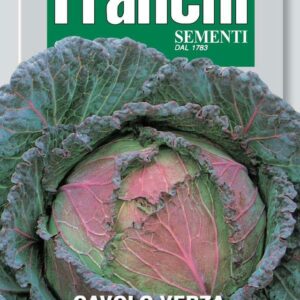
Cabbage San Michelle (Bag) – Franchi Sementi
Cabbage San Michelle (ex. Verza di Verona). Regional savoy type cabbage from Northern Italy. Green crinkly tender leaves with some red in the center. Very striking plant. Large firm heads. For spring or fall, but best for fall. Good storage and will hold well in the ground during cold weather. Taste actually improves with cold weather. 80-90 days. 6 gram packet, approximately 1200 seeds. Approximately 190-300 seeds per gram.
*Heritage Variety*
V58 - A late variety from Verona, Northern Italy which produces tightly wrapped head with erect blistered leaves, green with pink flush. Ideal for winter cultivation.
Approximate seeds quantity:@1800
Sow: from May - end July
Partnership plant: Chard, Cucumber, Bean, Lettuce, Pepper, Pea,
Tomato, Leek, Spinach.
What to sow after: Chicory, Bean, Endive, Lettuce, Pea, Leek,
Spinach, Lamb's lettuce.
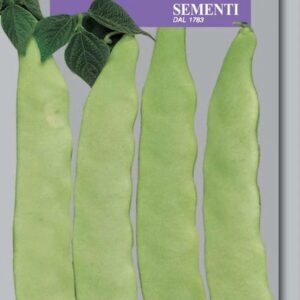
Bean Climbing French Smeraldo (Phaseolus vulgaris L.) (Bag) – Franchi Sementi
*Heritage Variety*
Mid/early white seeded variety. Produces numerous meaty and stringless pods .
Sow: from April - July
Plant height: 190cms
Pods: 24-26cm in length and up to 2cm wide
Partnership plant: Chard, Cauliflower, Cabbage, Cucumber,
Chicory and Radicchio, Lettuce, Aubergine, Radish.
What to sow after: Chard, Carrots, Cauliflower, Cabbage, Cucumber,
Chicory and Radicchio, Fennel, Endive, Lettuce, Aubergine,
Melon, Pepper, Tomato, Leek, Parsley, Radish, Spinach,
Lamb's lettuce, Courgette.
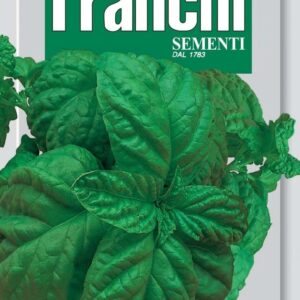
Basil Bolloso Napoletano (Ocimum basilicum L.) (Bag) – Franchi Sementi
Basil Napoletano. Big leaf basil. Dark green wrinkled leaves. Very intense flavor & aroma (unlike most big leaf types). Leaves are as big as your hand. Prefers full sun. 8 gram packet.
Basil has approximately 600-650 seeds per gram.
*Heritage Variety*
Featured on BBC GQT 2/3/12. Large basil with blistered leaves. This variety is only found in Naples and is highly prized for it's flavor. We keep the buffalo in this region and so traditionally it is used to wrap the large leaves around mozzarella balls and drizzle with olive oil. @4000.
Approximate seeds quantity:@4000
Sow: from March - July

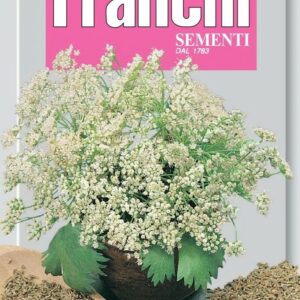
Anise (Bag) – Franchi Sementi
Annual plant easy to grow that required a sunny position. At the start of august, when the plant is flowering, remove the flowers which are drying out to facilitate later harvest of the fruits which are used to flavour dishes, sweets and liqueurs and have a strong aniseed flavour. Sow Spring and early summer.
Approximate seeds quantity:@4000
Sow: from full sun March - May
Anise. Lovely plant that needs a lot of heat and prefers full sun. Start seeds indoors 10 weeks before last frost; set outside when weather is warm and settled, trying not to disturb roots. Space 6" apart. Flowers in late summer. For anise seeds, cut stems, hang & collect seeds when dry.