

Basil Fine Verde Greek (Ocimum basilicum L.) (Bag) – Franchi Sementi
$2.00
*Heritage Variety*
This is a mid-early variety producing bushes variety with small leaves and quite a strong flavor. This variety is easy to grow, especially in containers.
Super for making good basilly sauces and with Red Pear Franchi tomatoes.
Approximate seeds quantity:@4000.
To be sow from March to July directly on the ground and inside the rest of the year.
Basil Fine Nano Compatto a Palla (formerly Greco a Palla). This is a beautiful plant, a bush variety with a naturally round shape. It has small, bright green leaves. The flavor is intense and holds up well in tomato dishes. Use for flavoring or just leave some on a plate or in a jar in the kitchen for aroma and color.
It can be grown in a large pot. For transplants, start 5-6 seeds in a cell six or seven weeks before set out date which is ten or more days after last frost date. Thin to three or four. Set plants 12 inches apart. For direct seeding, 7-8 seeds every foot, thin to two or three. 5 gram packet, about 3,000 seeds.
Basil has approximately 600-650 seeds per gram.
1g
*Heritage Variety*
This is a mid-early variety producing bushes variety with small leaves and quite a strong flavor. This variety is easy to grow, especially in containers.
Super for making good basilly sauces and with Red Pear Franchi tomatoes.
Approximate seeds quantity:@4000.
To be sow from March to July directly on the ground and inside the rest of the year.
Basil Fine Nano Compatto a Palla (formerly Greco a Palla). This is a beautiful plant, a bush variety with a naturally round shape. It has small, bright green leaves. The flavor is intense and holds up well in tomato dishes. Use for flavoring or just leave some on a plate or in a jar in the kitchen for aroma and color.
It can be grown in a large pot. For transplants, start 5-6 seeds in a cell six or seven weeks before set out date which is ten or more days after last frost date. Thin to three or four. Set plants 12 inches apart. For direct seeding, 7-8 seeds every foot, thin to two or three. 5 gram packet, about 3,000 seeds.
Basil has approximately 600-650 seeds per gram.
1g
| Brands | Franchi Sementi |
|---|
Related products
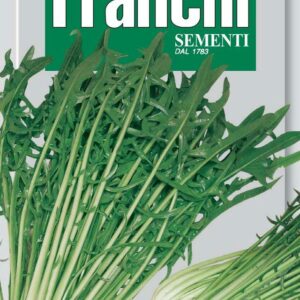
Chicory Catalogna Of Pugliese (Bag) – Franchi Sementi
Chicory Catalogna Pugliese. Tall, open, green leaf chicory. Long white stems with a fair amount of serrated green leaves. Cook or eat fresh in salads. Best for fall. 10 or 28 gram packet. Approximately 600-900 seeds per gram.
*Heritage Variety*
R23 - Upright chicory with long 'serrated' leaves with white white ribs. Early.
Approximate seeds quantity:@6000
Sow: from March - mid August and harvest April - end October.
Partnership plant: Carrot, Bean, Fennel, Lettuce, Pepper,
Tomato.
What to sow after: Cauliflower, Cabbage, Cucumber, Bean,
Aubergine, Melon, Pepper, Pea, Tomato, Radish, Courgette.
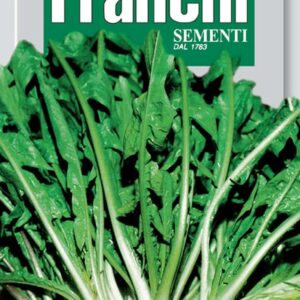
Chicory Barba di Cappuccino-Monk’s Beard (Bag) – Franchi Sementi
Monks' Beard Chicory. Long thick stems which are white on the bottom and green above. Green leaves with serrated edges. 70-75 days. Best in Fall. Use in salads or cook. Space at 4 inches between plants, 8-10 inches between rows. 12 gram pack. Approximately 600-900 seeds per gram.
*Heritage Variety*
R29 - The Cappuccini are missionary monks and literally translated, this variety is called "Cappuccini" Friars Beard.
Approximate seeds quantity:@6000
Sow: from May - August.
Partnership plant: Carrot, Bean, Fennel, Lettuce, Pepper,
Tomato.
What to sow after: Cauliflower, Cabbage, Cucumber, Bean,
Aubergine, Melon, Pepper, Pea, Tomato, Radish, Courgette.
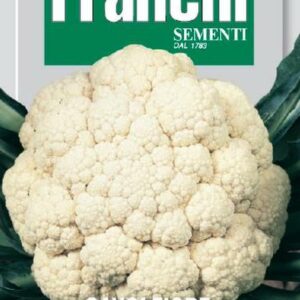
Cauliflower Verona Tardivo (Bag) – Franchi Sementi
*Heritage Variety*
V25 - Cream coloured head of good dimensions and good resistance to cold. This variety is only found in and around Verona.
Approximately 80 days to maturity
Approximate seeds quantity:@6000
Sow: from May - end July and harvest February - April
Partnership plant: Chard, Cucumber, Bean, Lettuce, Pepper, Pea,
Tomato, Leek, Spinach.
What to sow after: Chicory, Bean, Endive, Lettuce, Pea, Leek,
Spinach, Lamb's lettuce.
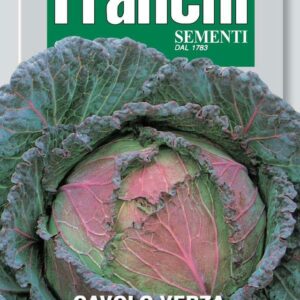
Cabbage San Michelle (Bag) – Franchi Sementi
Cabbage San Michelle (ex. Verza di Verona). Regional savoy type cabbage from Northern Italy. Green crinkly tender leaves with some red in the center. Very striking plant. Large firm heads. For spring or fall, but best for fall. Good storage and will hold well in the ground during cold weather. Taste actually improves with cold weather. 80-90 days. 6 gram packet, approximately 1200 seeds. Approximately 190-300 seeds per gram.
*Heritage Variety*
V58 - A late variety from Verona, Northern Italy which produces tightly wrapped head with erect blistered leaves, green with pink flush. Ideal for winter cultivation.
Approximate seeds quantity:@1800
Sow: from May - end July
Partnership plant: Chard, Cucumber, Bean, Lettuce, Pepper, Pea,
Tomato, Leek, Spinach.
What to sow after: Chicory, Bean, Endive, Lettuce, Pea, Leek,
Spinach, Lamb's lettuce.
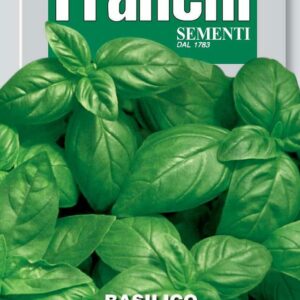
Basil Italiano Classico (Ocimum basilicum L.) (Bag) – Franchi Sementi
Italian Classic Basil. This sweet Genovese basil is our most popular variety. It is the same strain that made pesto famous worldwide. (Our Italian supplier, Franchi Seeds, calls it Italian Classic rather than Genovese because the region of Genoa got an Indicazione Geografica Protetta (IGP) trademark that limits the use of the name Genovese to basil grown in a certain area of Liguria; however, the seed is grown elsewhere in Italy and so cannot have the name Genovese within Italy. )
Whatever this basil is called, it's the best. This is the classic basil used for sauces, pesto, pizza, and just about everything else. Leaves are soft and fragrant with a delicious taste.
The seed count in a pack is enormous -- about 4,800 seeds. Why so much seed? Because in Italy, people like to pick basil very young, so they seed it repeatedly and just pull the entire plants when they are about 5-6 inches tall. In the U.S., most people grow a few plants and pick from them all summer long, so a packet of seeds lasts a long time. Basil seed, if kept cool and dry (but not in the refrigerator) will remain viable for up to 5 years. Try one of our seed storage tins for keeping extra seed.
Basil has approximately 600-650 seeds per gram.
FUSARIUM FREE - TESTED.
*Heritage Variety*
Basil Classico Italiano - This is the classic style basil which is also used for making 'pesto' but has a million other uses in the kitchen. The ideal windowsill herb too.
This is a mid-early variety producing vigorus plants. Easy to grow and perfect for containers.
Approximate seeds quantity: @4000 seeds.
To be sow from March to July directly on the ground and inside the rest of the year.
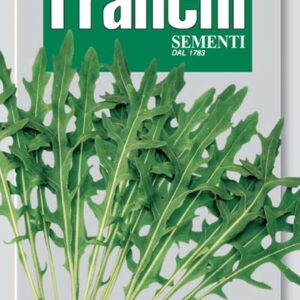
Arugula Selvatica or Wild Rocket (Diplotaxis tenuifollia)(Bag) – Franchi Sementi
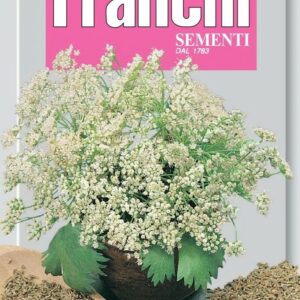
Anise (Bag) – Franchi Sementi
Annual plant easy to grow that required a sunny position. At the start of august, when the plant is flowering, remove the flowers which are drying out to facilitate later harvest of the fruits which are used to flavour dishes, sweets and liqueurs and have a strong aniseed flavour. Sow Spring and early summer.
Approximate seeds quantity:@4000
Sow: from full sun March - May
Anise. Lovely plant that needs a lot of heat and prefers full sun. Start seeds indoors 10 weeks before last frost; set outside when weather is warm and settled, trying not to disturb roots. Space 6" apart. Flowers in late summer. For anise seeds, cut stems, hang & collect seeds when dry.