Tomato San Marzano Naples (Solanum Lycopersicum L.) (Bag) – Franchi Sementi
$2.00
*Heritage variety *
* * This variety is on the Slow Food ‘Ark of Taste’ which means it is endangered. https://www.fondazioneslowfood.com/en/ark-of-taste-slow-food/san-marzano-tomato/
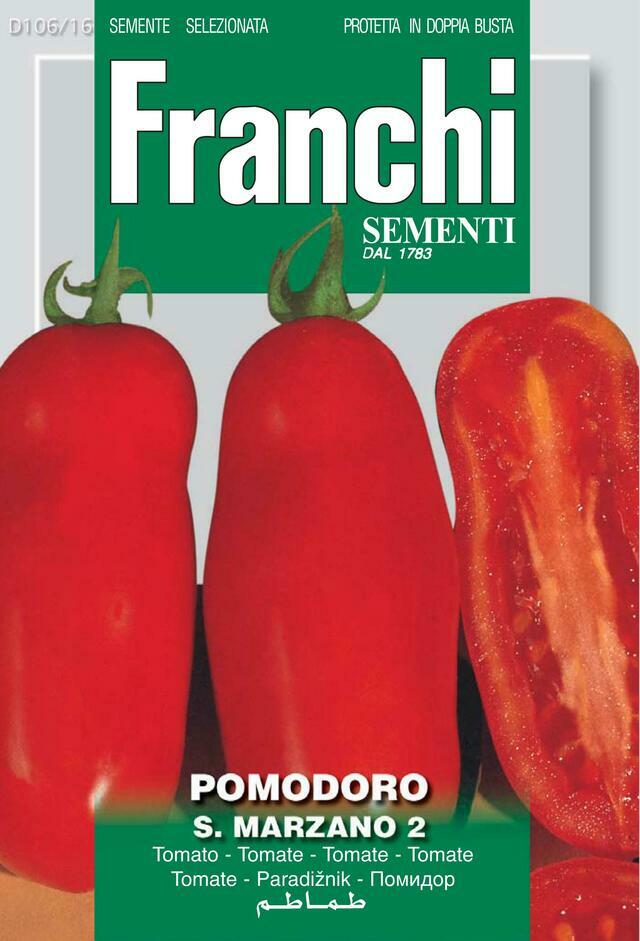
T4 -Mentioned on BBC Radio 4’s Food Programme 10/6/12. Classic Italian plum tomato from Naples used mainly for cooking as it has very little water inside, few seeds and is very meaty. Use for making Passata, cooking.
Fruits weight: up to 70g – 80g.
Growing habit: Indeterminate (cordon)
Approximate seeds quantity:@300
Sow: from February to April
Variety: Outdoor
Getting into a field of ripe San Marzano tomatoes is a unique experience: you are stunned by the fragrances of freshly cut grass and spices emanated by this tomato also when it is still green and persistent even in the canned product. All aromas reminding of the past, when salads tasted of tomato and sun and did not look like alien imperishable, odourless and flavourless objects. Up to twenty years ago, the very fertile territory around Naples and the sarnese-nocerino countryside in the province of Salerno, particularly suitable for vegetable growing, was mainly farmed with San Marzano tomatoes, a very delicate variety, with a thin skin, which keeps well also after being preserved, but which needs to be handled with care. However, due to diseases and low competitiveness in terms of cultivation costs, more productive hybrids became widespread, as more resistant to diseases and more suitable for mechanized work, but with poorer quality and organoleptic properties. The canning companies producing peeled tomatoes started purchasing these hybrids, thus endangering indigenous San Marzano.San Marzano tomatoes are grown like vines and are harvested seven, eight times or more from July to September, only when perfectly ripe and after sunset. After picking them up, the tomatoes are rinsed with water and put in the cans, then cooked for 13 minutes. Nothing else is needed: no additives, no preservatives. It will keep well for at least one year. The several small artisan firms, mainly employing women, peel the tomatoes. But the real personality of San Marzano is seen in the plate: the sauce made with these tomatoes literally sticks onto pasta and does not release any acidity.The San Marzano tomato is inextricably linked to Neapolitan pizza (Margherita), and is also an ingredient in traditional Neapolitan rag√π (meat sauce).
1g
*Heritage variety *
* * This variety is on the Slow Food ‘Ark of Taste’ which means it is endangered. https://www.fondazioneslowfood.com/en/ark-of-taste-slow-food/san-marzano-tomato/
T4 -Mentioned on BBC Radio 4’s Food Programme 10/6/12. Classic Italian plum tomato from Naples used mainly for cooking as it has very little water inside, few seeds and is very meaty. Use for making Passata, cooking.
Fruits weight: up to 70g – 80g.
Growing habit: Indeterminate (cordon)
Approximate seeds quantity:@300
Sow: from February to April
Variety: Outdoor
Getting into a field of ripe San Marzano tomatoes is a unique experience: you are stunned by the fragrances of freshly cut grass and spices emanated by this tomato also when it is still green and persistent even in the canned product. All aromas reminding of the past, when salads tasted of tomato and sun and did not look like alien imperishable, odourless and flavourless objects. Up to twenty years ago, the very fertile territory around Naples and the sarnese-nocerino countryside in the province of Salerno, particularly suitable for vegetable growing, was mainly farmed with San Marzano tomatoes, a very delicate variety, with a thin skin, which keeps well also after being preserved, but which needs to be handled with care. However, due to diseases and low competitiveness in terms of cultivation costs, more productive hybrids became widespread, as more resistant to diseases and more suitable for mechanized work, but with poorer quality and organoleptic properties. The canning companies producing peeled tomatoes started purchasing these hybrids, thus endangering indigenous San Marzano.San Marzano tomatoes are grown like vines and are harvested seven, eight times or more from July to September, only when perfectly ripe and after sunset. After picking them up, the tomatoes are rinsed with water and put in the cans, then cooked for 13 minutes. Nothing else is needed: no additives, no preservatives. It will keep well for at least one year. The several small artisan firms, mainly employing women, peel the tomatoes. But the real personality of San Marzano is seen in the plate: the sauce made with these tomatoes literally sticks onto pasta and does not release any acidity.The San Marzano tomato is inextricably linked to Neapolitan pizza (Margherita), and is also an ingredient in traditional Neapolitan rag√π (meat sauce).
1g
Related products
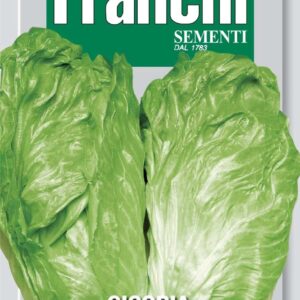
Chicory Bianca Di Milano (Bag) – Franchi Sementi
R7 - Upright green Chicory with tightly packed, large head. A very good summer chicory for shredding. @6000 seeds. Sow
Approximate seeds quantity:@6000
Sow: from June - August and harvest October - mid December.
Partnership plant: Carrot, Bean, Fennel, Lettuce, Pepper,
Tomato.
What to sow after: Cauliflower, Cabbage, Cucumber, Bean,
Aubergine, Melon, Pepper, Pea, Tomato, Radish, Courgette.
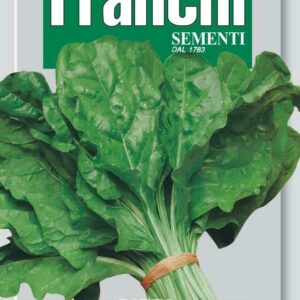
Chard Costa Verde Aka ‘Perpetual Spinach’ or Spinach Beet (Bag) – Franchi Sementi
Chard Verde da Taglio. Green cut & come again. Very thin stems, incredibly sweet & tender leaves. Harvest outer leaves or simply cut the entire plant as it will regrow. Tastes as good as spinach. Spring, summer & fall; will overwinter in zone 5 in an unheated greenhouse or with some protection. 7 gram packet. Approximately 40-60 seeds per gram.
*Heritage Variety*
Light green, smooth leaves which are cooked liked spinach. If you like to eat the legs of the chard then we recommend the Swiss chard above as they are larger. This variety can be harvested 1.5 months later than Swiss Chard however. Grows again quickly after cutting and commonly called Perpetual Spinach although it is not a true spinach it doesn't bolt like spinach and goes on and on or spinach beet bearing in mind that this variety resembles spinach more than chard but is a beet (related to beetroot!).
Approximate seeds quantity:@500
Sow: from March - mid September
Partnership plant: Carrots, Cauliflower, Cabbage, Bean, Radish,
What to sow after: Cauliflower,Cucumber, Chicory, Bean,
Endive, Lettuce, Melon, Pea,Leek, Radish, Courgette.
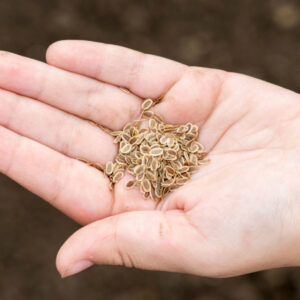
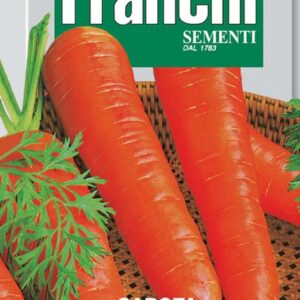
Carrot Flakkee Gigante (Daucus Carota) (Bag) – Franchi Sementi
Carrot Flakkee 2. Conical shape which does well in heavy soil. Excellent taste. Very crisp & tender. An all-around great carrot. 8 gram packet. Approximately 400-1200 seeds per gram.
V88 - Late variety that produces large, long carrots. This popular variety is also known as a Flak carrot. The root has an bright orange flash with lighter core.
This carrot can be grown in heavy soil.
Approximate seeds quantity:@7000
Sow: from March - July
Partnership plant: Chard, Chicory, Lettuce, Pea, Tomato,
Leek, Radish, Spinach.
What to sow after: Cucumber, Chicory, Bean, Endive, Lettuce,
Melon, Pea, Radish, Courgette.
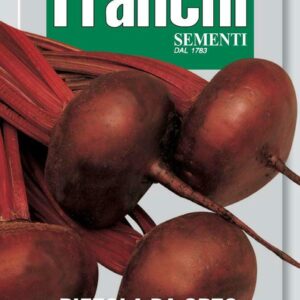
Beetroot Egitto Migliorata (Bag) – Franchi Sementi
Very flat red beet shaped like a cipolla onion. Excellent taste. Very sweet beet; no earthy taste to these. Nice red tops. Beautiful tops become dark bronze/red in cool weather. Ready in 55-60 or so days. 7 gram pack. Approximately 40-60 seeds per gram.
V10 - 'Dark Flat Egyption'. Early round variety. Semi flat of medium dimensions with purple red flesh. Dates to around 1850.
Approximate seeds quantity:@450
Sow: from March - June
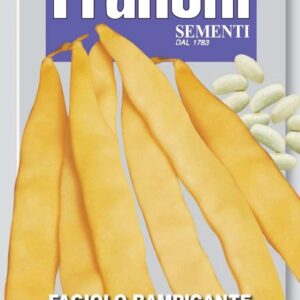
Bean Climbing Meraviglia di Venezia (Phaseolus vulgaris L.) (Bag) – Franchi Sementi
Climbing French Bean - Meraviglia di Venezia. The "100 gram" packet is actually 170 grams. Vigorous plant, heavy producer of up to 10 inch meaty light yellow roma type beans. White seed. No strings & good flavor. The bean salad using this and Supermarconi was a real hit. Like all pole beans, keep picking to encourage continued production. 55 or so days; very early for a pole bean. Vigorous climber needs support: use trellis, tripods or single poles at least 7' tall. Plant after soil has warmed up well since seeds are not treated. 3-4 seeds around base of each pole or 2 seeds/six inches for trellis. Thin to one/six inches for trellis, 2 plants for poles. 30 grams. Approx. 80 seeds. The 170 gram pack contains approx. 440 seeds.
*Heritage Variety* *Endangered Variety from the Slow Food register of varieties at risk, the 'Ark of Taste'* https://www.fondazioneslowfood.com/en/ark-of-taste-slow-food/meraviglia-di-venezia-bean/
Marvel of Venice Yellow French bean
B17 - This wide, meaty yellow French Bean is stringless. It is great hot as a vegetable, but it really comes into it's own in a bean salad dressed with Olive oil and balsamic vinegar from Modena.
Early variety with white seeds. The plant reach and height of 190cm, with pods about 20cm long and 3cm wide.
Weight: 30g
To be sown from April to July
Approximate seeds quantity: @ 150seeds
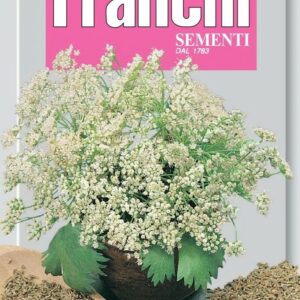
Anise (Bag) – Franchi Sementi
Annual plant easy to grow that required a sunny position. At the start of august, when the plant is flowering, remove the flowers which are drying out to facilitate later harvest of the fruits which are used to flavour dishes, sweets and liqueurs and have a strong aniseed flavour. Sow Spring and early summer.
Approximate seeds quantity:@4000
Sow: from full sun March - May
Anise. Lovely plant that needs a lot of heat and prefers full sun. Start seeds indoors 10 weeks before last frost; set outside when weather is warm and settled, trying not to disturb roots. Space 6" apart. Flowers in late summer. For anise seeds, cut stems, hang & collect seeds when dry.