Free delivery for orders above 100$ in beirut and matn areas

Contact Us
Made by Nature Made by Nature
  • Food Products
    • Fruits and Vegetables
      • Vegetables
      • Fruits
      • Mushrooms
    • Sweets and Goodies
      • Chococlate, Cereals and Bars
      • Snacks and Chips
      • Halawa and Spreads
      • Biscuits and Cookies
      • Gummy and Candy
    • Eggs, Dairy and Meat
      • Labneh and Yogurt
      • Eggs
      • Cheese
      • Meat and Fish
    • Frozen and Ready to eat
    • Bakery
    • Mouneh and Terroir Products
      • Honey
      • Olives, Oils, and Tapenade
      • Jams, Spreads and Preserves
      • Pickles
      • Molasses, Water, and Syrups
      • Thyme/Zaatar Mix and Sumac
      • Marzipan
    • Drinks and Beverages
      • Wine and Spirits
      • Tisane, Tea, and Coffee
      • Arak
      • Alcoholic Drinks
      • Juices and Refreshments
    • Off the Shelf
      • Pasta rice grains and beans
      • Seasoning sauces and dressing
      • Dried Fruits, Seeds, and Nuts
      • Sugar and Sweeteners
      • Cake and Ready Mix
      • Soup and Stews
  • Artisanal Products
    • Decorative Items
    • Clothes
    • Utensils
  • Health and Cosmetics
    • Cosmetics
      • Soaps
      • Honey Based Products
      • Face Care
      • Body and Skin Care
      • Hair Care
    • Medicinal
      • Medicinal Plants and Herbs
      • Supplements, Pills and Capsules
    • Oils
      • Essential Oils
      • Carrier Oils and Blends
  • Home and Garden
    • Seeds and Seedlings
    • Soil Mix and Fertilizers
    • Aromatic Plants
    • Flowers and Arrangements
    • Green Plant
    • Bonsai
    • Cacti and Succulents
    • Fruiting Trees
    • Flowering Plants
      • Indoor Flowering Plant
      • Outdoor Flowering Plants
    • Pots and Planters
    • Pet Corner
    • Home and Garden Decor
    • Gardening Tools
    • GO Ecolo
  • Brands
  • MBN Lifestyle
    • Non Dairy Milk
    • Keto
    • Vegan
    • Sugar Free
    • Gluten Free
Search
0 Wishlist
Login / Register
9 items $158.50
Menu
Made by Nature
9 items $158.50
Browse Categories
  • Fruits & Vegetables
  • Home and Garden Decor
  • Cosmetics
  • Seeds and Seedlings
  • Non Dairy Milk
Wrong menu selected
View cart “Basil Fine Verde Greek (Ocimum basilicum L.) (Bag) – Franchi Sementi” has been added to your cart.
Click to enlarge

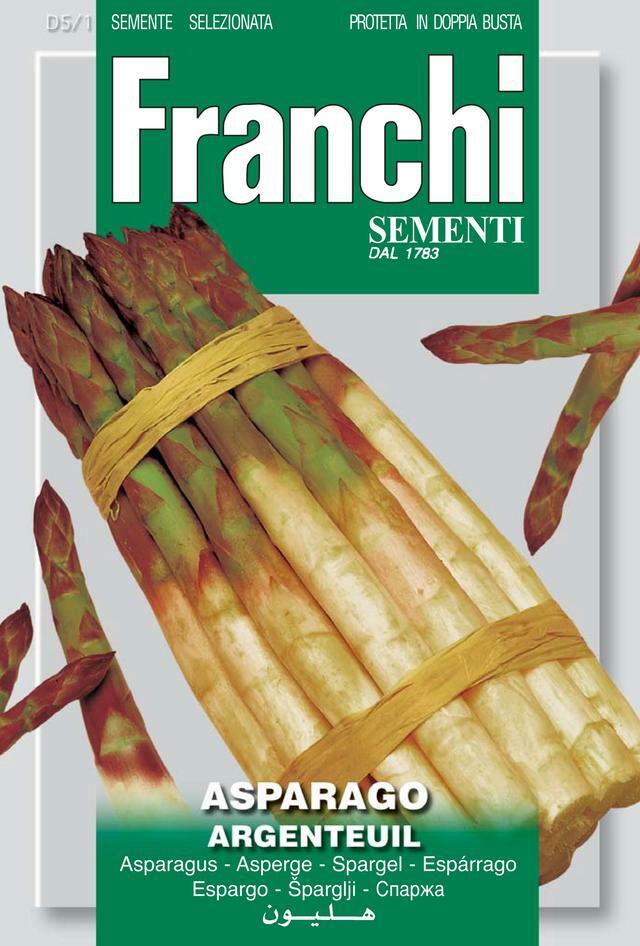
Asparagus Of Argenteuils (Asparagus Officinalis) (Bag) – Franchi Sementi

$2.00

*This variety is on the Slow Food ‘Ark of Taste’ which means it is endangered. By growing it you are supporting Biodiversity. https://www.fondazioneslowfood.com/en/ark-of-taste-slow-food/argenteuil-asparagus/

V1 – Early variety with tasty, tender tips. Forms the crowns the first year and starts to produce asparagus the following year. The first year, these should be left, the 2nd year cut half and the third year, cut all. Belle dArgenteuil asparagus is white with tips coloured from pink to purple; it is very aromatic, slightly bitter. Its stem is firm and tender, and its flavour is very delicate. White asparagus had to wait until 1755 before overtaking green asparagus, which grows in the open air. Developed in 1830 by Louis Lh√©rault, the improved late-growing Argenteuil asparagus variety travelled the world over in the 19th century. This new variety is known for its precociousness, its large size, its productivity, its tenderness (after peeling) and its largely white colour due to the fact it grows entirely underground, in the dark, which prevents it from flowering. Growing sometimes to 25cm in length and 3 to 6cm in diameter, it was highly appreciated by Parisian gourmands, who preferred it meaty. This vegetable has been very successful and a sort of craze: 400,000 were harvested in 1867, more than a million in 1900. They were awarded medals and rewarded in universal shows, most notably in the Paris World Fair in 1878. The ‚ÄúBelle dArgenteuil‚Äù as it is called, even appeared on the menu of the first class passengers on the Titanic on 14 April 1912 (in a cold asparagus salad vinaigrette) shortly before it sank. The purple asparagus such as the ‚ÄúBelle de Argenteuil‚Äù is planted in a very special way: different from green asparagus in that as it grows, it is covered up to eliminate being exposed to light so it can develop and remain tender instead of flowering. It is picked with a trowel (also used for endives) while still underground, whereas green asparagus is cut with scissors. Asparagus is a plant that grows in the night and must be harvested very early in the morning to keep its freshness. Its season lasts 3 months more or less, usually from 15 March to 15 June. Asparagus was a dish highly appreciated by Louis XIV‚Äìwho ate them in strips with a soft-boiled egg‚Äìand were very frequently on the table at Versailles, especially in winter, obliging his head gardener La Quintaine to grow them in a hothouse with a ‚Äúhot bed‚Äù made from manure. Historically, Argenteuil had been a land of vineyards since ancient times, vines that were highly developed in the 12th century thanks to the Notre Dame abbey monks. If the vines enriched the town ‚Äì they took up more than 3,000 hectares in the 18th century ‚Äì the development of the railway transported the competitive, often better quality, wines. Then arrived the diseases, notably phylloxera, and the troop mobilisations of the First World War diminished this culture. Some Argenteuil inhabitants, whose vineyards were decimated, saw their fortunes turn around by planting asparagus instead. Simple recipes were developed to highlight the delicacy, notably poached eggs Argenteuil, or Argenteuil soup made with the shoots while the tips were used in another preparation. For the entire 19th and 20th centuries, asparagus enjoyed a prominent place on the daily menus of the middle classes, and porcelain and ceramic producers of the day made services dedicated to this vegetable, at the same time France was the number one asparagus producer in Europe. After 1900, with the appearance of diseases and especially the spread of industrial activity, the Argenteuil asparagus production diminished. Today the Argenteuil asparagus variety has been ‚Äúpolluted‚Äù by cross breeding with other varieties, and often the fat, purple asparagus called ‚ÄúArgenteuil‚Äù is no longer grown but is a hybrid of the Argenteuil variety. Growing asparagus is very demanding: five years are needed from planting the seeds to the first harvest, and during the 10 years they produce, 3.5 tons are harvested per hectare. A vegetable typical of Ile-de-France, the sandy soil in the loop of the Seine (Argenteuil, Corbeil) would be particularly beneficial to it. There are not many market farmers who grow the Argenteuil variety. One of them, Laurent Berrurier, tells us he grows on average 1 ton per year.

Approximate seeds quantity:@200
Sow: from March – June

Arparagus Precoce d’Argenteuil. Early. Light green big spears with purplish scales. Asparagus beds produce for 20 or more years. Easy to grow; rust resistance. These are seeds; USDA will not allow import of root stock. Starting from seed means it takes an additional year to get your bed productive. To start plants, sow seed in a small furrow; place seeds 1 inch deep; space rows 12 inches. Thin to 5 inches. The next year, move them to a permanent bed. Make sure you have prepared the area well (dug deep, made any soil amendments). 2.5 gram packet.

Asparagus seed packets have approximately 24-50 seeds per gram.


1g
Add to wishlist
17 People watching this product now!
SKU: FRANCHI16060010 Category: Seeds and Seedlings
Share:
  • Description
Description

*This variety is on the Slow Food ‘Ark of Taste’ which means it is endangered. By growing it you are supporting Biodiversity. https://www.fondazioneslowfood.com/en/ark-of-taste-slow-food/argenteuil-asparagus/

V1 – Early variety with tasty, tender tips. Forms the crowns the first year and starts to produce asparagus the following year. The first year, these should be left, the 2nd year cut half and the third year, cut all. Belle dArgenteuil asparagus is white with tips coloured from pink to purple; it is very aromatic, slightly bitter. Its stem is firm and tender, and its flavour is very delicate. White asparagus had to wait until 1755 before overtaking green asparagus, which grows in the open air. Developed in 1830 by Louis Lh√©rault, the improved late-growing Argenteuil asparagus variety travelled the world over in the 19th century. This new variety is known for its precociousness, its large size, its productivity, its tenderness (after peeling) and its largely white colour due to the fact it grows entirely underground, in the dark, which prevents it from flowering. Growing sometimes to 25cm in length and 3 to 6cm in diameter, it was highly appreciated by Parisian gourmands, who preferred it meaty. This vegetable has been very successful and a sort of craze: 400,000 were harvested in 1867, more than a million in 1900. They were awarded medals and rewarded in universal shows, most notably in the Paris World Fair in 1878. The ‚ÄúBelle dArgenteuil‚Äù as it is called, even appeared on the menu of the first class passengers on the Titanic on 14 April 1912 (in a cold asparagus salad vinaigrette) shortly before it sank. The purple asparagus such as the ‚ÄúBelle de Argenteuil‚Äù is planted in a very special way: different from green asparagus in that as it grows, it is covered up to eliminate being exposed to light so it can develop and remain tender instead of flowering. It is picked with a trowel (also used for endives) while still underground, whereas green asparagus is cut with scissors. Asparagus is a plant that grows in the night and must be harvested very early in the morning to keep its freshness. Its season lasts 3 months more or less, usually from 15 March to 15 June. Asparagus was a dish highly appreciated by Louis XIV‚Äìwho ate them in strips with a soft-boiled egg‚Äìand were very frequently on the table at Versailles, especially in winter, obliging his head gardener La Quintaine to grow them in a hothouse with a ‚Äúhot bed‚Äù made from manure. Historically, Argenteuil had been a land of vineyards since ancient times, vines that were highly developed in the 12th century thanks to the Notre Dame abbey monks. If the vines enriched the town ‚Äì they took up more than 3,000 hectares in the 18th century ‚Äì the development of the railway transported the competitive, often better quality, wines. Then arrived the diseases, notably phylloxera, and the troop mobilisations of the First World War diminished this culture. Some Argenteuil inhabitants, whose vineyards were decimated, saw their fortunes turn around by planting asparagus instead. Simple recipes were developed to highlight the delicacy, notably poached eggs Argenteuil, or Argenteuil soup made with the shoots while the tips were used in another preparation. For the entire 19th and 20th centuries, asparagus enjoyed a prominent place on the daily menus of the middle classes, and porcelain and ceramic producers of the day made services dedicated to this vegetable, at the same time France was the number one asparagus producer in Europe. After 1900, with the appearance of diseases and especially the spread of industrial activity, the Argenteuil asparagus production diminished. Today the Argenteuil asparagus variety has been ‚Äúpolluted‚Äù by cross breeding with other varieties, and often the fat, purple asparagus called ‚ÄúArgenteuil‚Äù is no longer grown but is a hybrid of the Argenteuil variety. Growing asparagus is very demanding: five years are needed from planting the seeds to the first harvest, and during the 10 years they produce, 3.5 tons are harvested per hectare. A vegetable typical of Ile-de-France, the sandy soil in the loop of the Seine (Argenteuil, Corbeil) would be particularly beneficial to it. There are not many market farmers who grow the Argenteuil variety. One of them, Laurent Berrurier, tells us he grows on average 1 ton per year.

Approximate seeds quantity:@200
Sow: from March – June

Arparagus Precoce d’Argenteuil. Early. Light green big spears with purplish scales. Asparagus beds produce for 20 or more years. Easy to grow; rust resistance. These are seeds; USDA will not allow import of root stock. Starting from seed means it takes an additional year to get your bed productive. To start plants, sow seed in a small furrow; place seeds 1 inch deep; space rows 12 inches. Thin to 5 inches. The next year, move them to a permanent bed. Make sure you have prepared the area well (dug deep, made any soil amendments). 2.5 gram packet.

Asparagus seed packets have approximately 24-50 seeds per gram.


1g

Related products

Eggplant Violetta Lunga (Bag) – Franchi Sementi

$2.00

"Long Purple." 8-inch-long, rustic, deep purple eggplant. Grown all over Italy. Classic rich eggplant taste. Good producer, reliable. 70 days. 3 gram packet, approximately 600 seeds. Approximately 200-250 per gram.

*Heritage variety*

V3 - This is the classic Italian eggplant typically used in Emilia Romagna to make 'Parmigiana' with tomatoes and parmesan cheese. This is a mid-early variety, very productive. It produces long, dark and slightly curved aubergine of medium dimensions with very few seeds inside.

Approximate seeds quantity:@660
Sow: from February - mid May


1g
Add to wishlist
Add to cart
Quick view

Dianthus barbatus (Sweet William) (Bag) – Franchi Sementi

$2.00

1g
Add to wishlist
Add to cart
Quick view

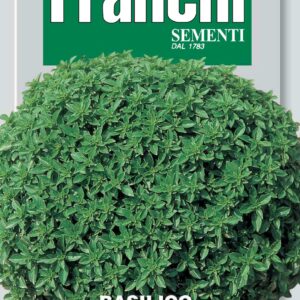
Basil Fine Verde Greek (Ocimum basilicum L.) (Bag) – Franchi Sementi

$2.00

*Heritage Variety*
This is a mid-early variety producing bushes variety with small leaves and quite a strong flavor. This variety is easy to grow, especially in containers.
Super for making good basilly sauces and with Red Pear Franchi tomatoes.

Approximate seeds quantity:@4000.
To be sow from March to July directly on the ground and inside the rest of the year.

Basil Fine Nano Compatto a Palla (formerly Greco a Palla). This is a beautiful plant, a bush variety with a naturally round shape. It has small, bright green leaves. The flavor is intense and holds up well in tomato dishes. Use for flavoring or just leave some on a plate or in a jar in the kitchen for aroma and color.

It can be grown in a large pot. For transplants, start 5-6 seeds in a cell six or seven weeks before set out date which is ten or more days after last frost date. Thin to three or four. Set plants 12 inches apart. For direct seeding, 7-8 seeds every foot, thin to two or three. 5 gram packet, about 3,000 seeds.

Basil has approximately 600-650 seeds per gram.


1g
Add to wishlist
Add to cart
Quick view

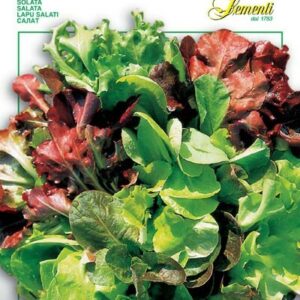
Lettuce Four Seasons Mesclun (Bag) – Franchi Sementi

$2.00

Misticanza Quattro Stagioni — Mesclun Four Seasons. Mesclun mix of lettuce, endive, radicchio & chicory. 14 varieties including Verona, Pan Zucchero, Four Seasons lettuce, Romaines, cutting lettuces. For salads or braising. Cut when 3-4 inches tall. Make succession plantings every 2-3 weeks for continuous harvests. 8 gram packet, approximately 4500 seeds. Approximately 600-1200 seeds per gram.


1g
Add to wishlist
Add to cart
Quick view

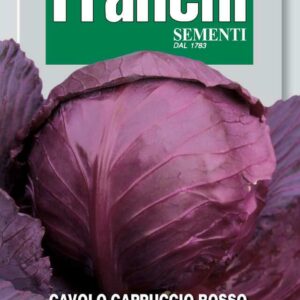
Cabbage Red Tete Noire (Bag) – Franchi Sementi

$2.00

Cabeza Negra. Also known as Cavolo Cappuccio. (Red Cabbage). Solid red smooth leaf cabbage. Large head, good taste. 85 days. Best color if planted for fall harvest. 6 gram packet, approx. 1200 seeds. Approximately 190-300 seeds per gram.

V57 - Frost resistant. Firm, deep red. A Christmas favourite braised sweet and sour.

Approximate seeds quantity:@1500
Sow: from May - end July


Partnership plant: Chard, Cucumber, Bean, Lettuce, Pepper, Pea,
Tomato, Leek, Spinach.

What to sow after: Chicory, Bean, Endive, Lettuce, Pea, Leek,
Spinach, Lamb's lettuce.


1g
Add to wishlist
Add to cart
Quick view

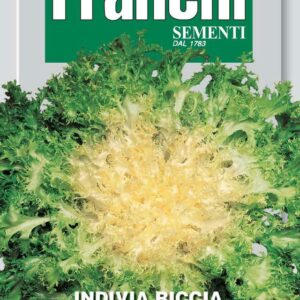
Endive Cuor d’Oro (Bag) – Franchi Sementi

$2.00

Endive Cuor d'Oro - Golden Heart. Early. Nice sized head, loose leaves. Dark green with golden center. Good cooked in salads and soups. If you want a really white center, blanch the heart by covering with bucket or tying up top 10 days or so before harvesting. 10 and 30 gram packet. Approximately 900 seeds per gram.

*Heritage Variety*
Endive Cuor dOro: Similar to Pancalieri but with a tighter head and a larger golden heart once blanched. Sow from June to end of August and harvest until the end of December, although they will usually overwinter in our mild UK climate. Dont be tempted to sow them in the spring along with your other lettuces, you wont get very good results. Its an endive, not a lettuce, even if it looks more like a lettuce. They need heat initially to germinate and start their journey, and then cold to develop. Most varieties are very hardy and will tolerate sub-zero. There are several varieties of escarole and endive; the open-headed ones should be tied up about seven to ten days before harvest to blanch the heart and make them tender. Or you can just stick a bucket on top and, when you harvest that head, move the bucket to the next one. Be lazy – use an elastic band. Be even lazier and plant them closer than the standard 20 cm apart, so they all bunch up and blanch themselves.

Sow: from June to the end of August
Harvest: from September to the end of December.
Approximate seeds quantity: @4800
Suitable for winter cultivation


Partnership plant: Tomato, Leek.

What to sow after: Cauliflower & Cabbage, Cucumber, Bean,
Aubergine, Melon, Pepper, Pea, Tomato, Radish, Courgette.


1g
Add to wishlist
Add to cart
Quick view

Watermelon Sugar Baby (Citrullus lanatus Thunb.) (Bag) – Franchi Sementi

$2.00

This is an Early variety producing round fruit of medium size. The skin is consistent thick and of a dark green colour. The flesh is sugary and of an intense red colour.

To be sow from March to June and harvest from July to September.
Approximate seeds quantity: @60 seeds.

Sugar Baby is an heirloom variety, introduced in 1956, that has remained popular because of its compact size and sweet flavor. It is considered an icebox melon because the fruits are small enough to fit in the icebox, or what we call a refrigerator. The melons are round with dark green, smooth skin and finely textured red flesh. It is one of the sweetest watermelons you can grow. The melons weigh 8-10 pounds and are about 8 inches across. Vines are long, running to 12 feet. Plants should be spaced 4 feet apart. Sugar Baby is one of the earliest melons to mature, requiring about 75 days from planting. Each plant should produce two or three melons. 6 gram packet = 150 seeds. Approximately 6-20 seeds per gram.


1g
Add to wishlist
Add to cart
Quick view

Impatiens balsamina (Bag) – Franchi Sementi

$2.00

1g
Add to wishlist
Add to cart
Quick view

Group 829

Top Categories
  • Fruits & Vegetables
  • Home and Garden Decor
  • Cosmetics
  • Seeds and Seedlings
  • Non Dairy Milk
Customer Service
  • Terms and conditions
  • Privacy Policy
  • Return and Refund Policy
  • FAQs
  • Shipping & Delivery
About Us
  • Our Story
  • Contact Us
  • Blog
Our Socials
With the support of
This platform was made possible with the support of the United States Agency for International Development (USAID) through the Trade and Investment Facilitation (TIF) project. The content of this platform is the sole responsibility of Nature By Marc Beyrouthy S.A.L. and does not necessarily reflect the views of USAID and the United States Government.

تم انشاء هذه المنصة بدعم من الوكالة الاميركيّة للتنمية الدولية (USAID) عبر مشروع تسهيل التبادل التجاري والاستثمار(TIF). ان شركة نايتشر باي مارك بيروتي ش.م.ل. هي المسؤولة الوحيدة عن محتويات هذه المنصة والتي لا تعكس بالضرورة وجهات نظر الوكالة أو حكومة الولايات المتحدة الأميركيّة.
Made by Nature Lebanon 2026 | DESIGNED & DEVELOPED BY TEDMOB.COM
payments
  • Food Products
    • Fruits & Vegetables
    • Sweets and Goodies
    • Eggs, Dairy and Meat
    • Off the Shelf
    • Drinks and Beverages
    • Mouneh and Terroir Products
    • The Bakery
    • Frozen and Ready to eat
  • Artisanal Products
    • Decorative Items
    • Clothes
    • Utensils
  • Health and Cosmetics Corner
    • Cosmetics
      • Soaps
      • Body and Skin Care
      • Face Care
      • Hair Care
    • Medicinal
      • Medicinal Plants and Herbs
      • Supplements, Pills and Capsules
    • Oils
      • Essential Oils
      • Carrier Oils and Blends
  • Home and Garden
    • Seeds and Seedlings
    • Soil Mix and Fertilizers
    • Aromatic Plants
    • Flowers and Arrangements
    • Green Plant
    • Bonsai
    • Cacti and Succulents
    • Fruiting Trees
    • Flowering Plants
      • Indoor Flowering Plant
      • Outdoor Flowering Plants
    • Pots and Planters
    • Pet Corner
    • Home and Garden Decor
    • Gardening Tools
    • GO Ecolo
  • Brands
  • MBN Lifestyle
    • Non Dairy Milk
    • Keto
    • Vegan
    • Sugar Free
    • Gluten Free
  • Wishlist
  • Login / Register
Shopping cart
Close
Sign in
Close


Lost your password?

No account yet?

Create an Account
Start typing to see products you are looking for.
Shop
0 Wishlist
9 items Cart
My account