

Endive Romanesco (Bag) – Franchi Sementi
$2.00
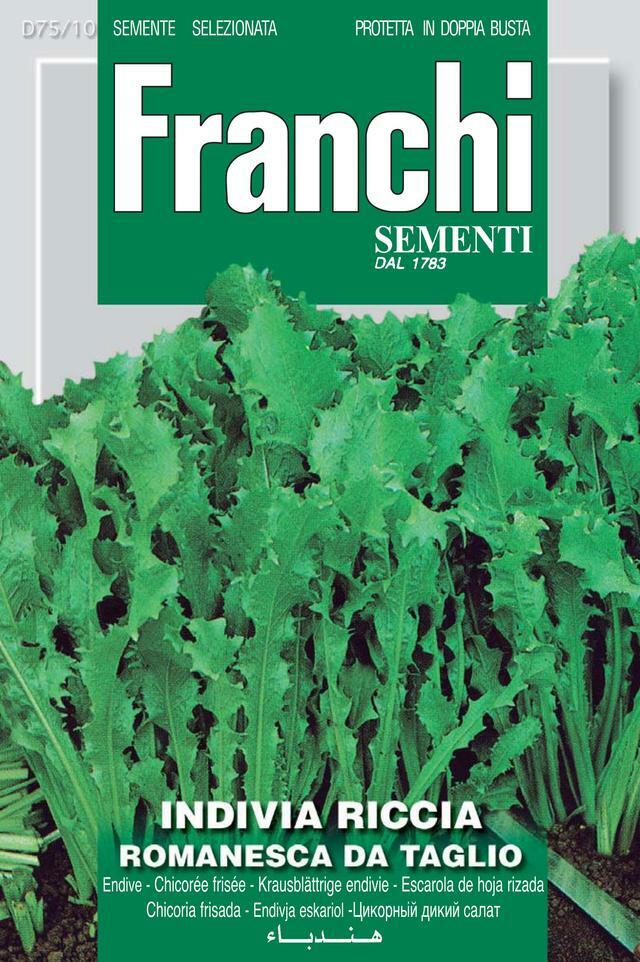
Endive Riccia Romanesco da Taglio. A cut and come again endive from Rome. Thin serrated dark green leaves with classic endive taste and texture. Space at 4″ between plants, 8″ between rows. 40-45 days. Plant grows in a small upright bunch which is easy to harvest. You can also just broadcast seed it trying to get seeds every inch or two and cut it when it gets three/four inches high. Simple to grow and good resistance to bolting. Best for spring and fall but will work at any time throughout the growing season. Perfect for that Roman salad you remember. Can also be cooked. 60 or so days for full size. 10 gram pack. Approximately 900 seeds per gram.
*Heritage Variety*
L40 РEndive Romanesco da Taglio: Roman cutting endive with thin, jagged upright leaves that grow in small bunches. This is a very easy variety to grow and use and it has a long sowing season. Dont be tempted to sow them in the spring along with your other lettuces, you wont get very good results. Its an endive, not a lettuce, even if it looks more like a lettuce. They need heat initially to germinate and start their journey, and then cold to develop. Most varieties are very hardy and will tolerate sub-zero. There are several varieties of escarole and endive; the open-headed ones should be tied up about seven to ten days before harvest to blanch the heart and make them tender. Or you can just stick a bucket on top and, when you harvest that head, move the bucket to the next one. Be lazy – use an elastic band. Be even lazier and plant them closer than the standard 20 cm apart, so they all bunch up and blanch themselves.
Sow: from April to October
Harvest May to mid December.
Approximate seeds quantity: @5600 seeds.
Partnership plant: Tomato, Leek.
What to sow after: Cauliflower & Cabbage, Cucumber, Bean,
Aubergine, Melon, Pepper, Pea, Tomato, Radish, Courgette.
1g
Endive Riccia Romanesco da Taglio. A cut and come again endive from Rome. Thin serrated dark green leaves with classic endive taste and texture. Space at 4″ between plants, 8″ between rows. 40-45 days. Plant grows in a small upright bunch which is easy to harvest. You can also just broadcast seed it trying to get seeds every inch or two and cut it when it gets three/four inches high. Simple to grow and good resistance to bolting. Best for spring and fall but will work at any time throughout the growing season. Perfect for that Roman salad you remember. Can also be cooked. 60 or so days for full size. 10 gram pack. Approximately 900 seeds per gram.
*Heritage Variety*
L40 РEndive Romanesco da Taglio: Roman cutting endive with thin, jagged upright leaves that grow in small bunches. This is a very easy variety to grow and use and it has a long sowing season. Dont be tempted to sow them in the spring along with your other lettuces, you wont get very good results. Its an endive, not a lettuce, even if it looks more like a lettuce. They need heat initially to germinate and start their journey, and then cold to develop. Most varieties are very hardy and will tolerate sub-zero. There are several varieties of escarole and endive; the open-headed ones should be tied up about seven to ten days before harvest to blanch the heart and make them tender. Or you can just stick a bucket on top and, when you harvest that head, move the bucket to the next one. Be lazy – use an elastic band. Be even lazier and plant them closer than the standard 20 cm apart, so they all bunch up and blanch themselves.
Sow: from April to October
Harvest May to mid December.
Approximate seeds quantity: @5600 seeds.
Partnership plant: Tomato, Leek.
What to sow after: Cauliflower & Cabbage, Cucumber, Bean,
Aubergine, Melon, Pepper, Pea, Tomato, Radish, Courgette.
1g
Related products
Chicory Bianca Di Milano (Bag) – Franchi Sementi
R7 - Upright green Chicory with tightly packed, large head. A very good summer chicory for shredding. @6000 seeds. Sow
Approximate seeds quantity:@6000
Sow: from June - August and harvest October - mid December.
Partnership plant: Carrot, Bean, Fennel, Lettuce, Pepper,
Tomato.
What to sow after: Cauliflower, Cabbage, Cucumber, Bean,
Aubergine, Melon, Pepper, Pea, Tomato, Radish, Courgette.
Carrot Touchon (Daucus Carota) (Bag) – Franchi Sementi
Carrot Touchon. An old French variety of superb quality and flavor ready in 65 days. 8 gram pack. 3,000 seeds. Approximately 400-1200 seeds per gram.
Carrot Touchon – this is an old French variety of superb quality and flavour.
Ready in 65 days, this plant produces roots about 17cm long, crunchy and tender.
Easy to grow and vigourous.
Approximate seeds quantity:@4000
Sow: from Spring/Summer
Partnership plant: Chard, Chicory, Lettuce, Pea, Tomato,
Leek, Radish, Spinach.
What to sow after: Cucumber, Chicory, Bean, Endive, Lettuce,
Melon, Pea, Radish, Courgette.

Capers (Bag) – Franchi Sementi
Capers/Cappero. Mature caper bushes can grow three feet high and spread four or five feet. They are quite pretty and aromatic. They require dry heat and intense sunlight to flourish. Will be killed by temperatures below 20 degrees F. In the north, bring them inside in the winter and treat them like rosemary. Seeds are sometimes difficult to germinate; soak seeds a day, put in refridgerator in wet towel in plastic bag for 6 weeks, then plant in 5" pots, 4 seeds/pot. Thin to strongest. When transplanting, disturb root as little as possible. May have flowers year 1, will have them year 2. 1 gram packet.
Indoor only. This perennial plant is ideal for pickling in vinegar for later use on pizza and in antipasti. Must be grown in a hot climate, or in a greenhouse/conservatory. Sow from Mar-Jun and add sand and gravel to the soil. Please note that germination can take from 3-12 months.
Capers/Cappero. Mature caper bushes can grow three feet high and spread four or five feet. They are quite pretty and aromatic. They require dry heat and intense sunlight to flourish. Will be killed by temperatures below 20 degrees F. In the UK, bring them inside in the winter and treat them like rosemary. Seeds are sometimes difficult to germinate; soak seeds a day, put in refrigerator in wet towel in plastic bag for 6 weeks, then plant in 5" pots, 4 seeds/pot. Thin to strongest. When transplanting, disturb root as little as possible. May have flowers year 1, will have them year 2. 1 gram packet. To learn more about growing capers, click here.
Approximate seeds quantity:@120
Sow: Spring
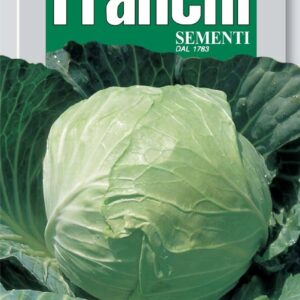
Cabbage Copenhague (Bag) – Franchi Sementi
V14b - Mid-Early variety that produces grey/green round head. The head have a good dimension and it is close and wrap tightly.
Approximate seeds quantity:@1500
Sow: from May - July
Partnership plant: Chard, Cucumber, Bean, Lettuce, Pepper, Pea,
Tomato, Leek, Spinach.
What to sow after: Chicory, Bean, Endive, Lettuce, Pea, Leek,
Spinach, Lamb's lettuce.
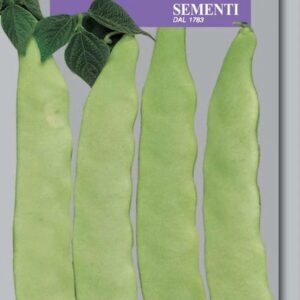
Bean Climbing French Smeraldo (Phaseolus vulgaris L.) (Bag) – Franchi Sementi
*Heritage Variety*
Mid/early white seeded variety. Produces numerous meaty and stringless pods .
Sow: from April - July
Plant height: 190cms
Pods: 24-26cm in length and up to 2cm wide
Partnership plant: Chard, Cauliflower, Cabbage, Cucumber,
Chicory and Radicchio, Lettuce, Aubergine, Radish.
What to sow after: Chard, Carrots, Cauliflower, Cabbage, Cucumber,
Chicory and Radicchio, Fennel, Endive, Lettuce, Aubergine,
Melon, Pepper, Tomato, Leek, Parsley, Radish, Spinach,
Lamb's lettuce, Courgette.
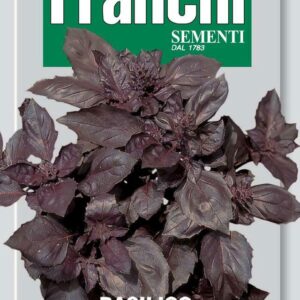
Basil Violetto Aromatico / Dark Opal (Ocimum basilicum L.) (Bag) – Franchi Sementi
Violetto Aromatico / Dark Opal basil. This is a really pretty basil. Nice color, good size plant similar in size and growth habit to Genovese basil. Good aroma and flavor. Will do ok in a pot, but does better outside in the garden. Consider using it as a decorative plant in place of flowers. A bed of red basil, Genovese basil and lettuce leaf basil is quite pretty. For transplants, start 6-7 weeks before set out date (10 days after last frost date), 5-6 seeds/cell and thin to two or three. Plant at 12 inch intervals. For direct seed, 6-7 seeds every 12 inches cover with 1/4 inch fine soil and keep watered until germination: 7-10 days. Thin to 2-3 plants per space.
Basil has approximately 600-650 seeds per gram.
*Heritage Variety*
Red Basil. This is a mid-early variety with vigorus plant. The leaves have a bright violet colour and a sweet intense perfume. Sweeter tasting than regular basil with a slight clove undertone.
Easy to grow and ideal for containers.
Approximate seeds quantity: @3200 seeds.
To be sown from March to July directly in the ground or all year long in a protected indoor system.