1g
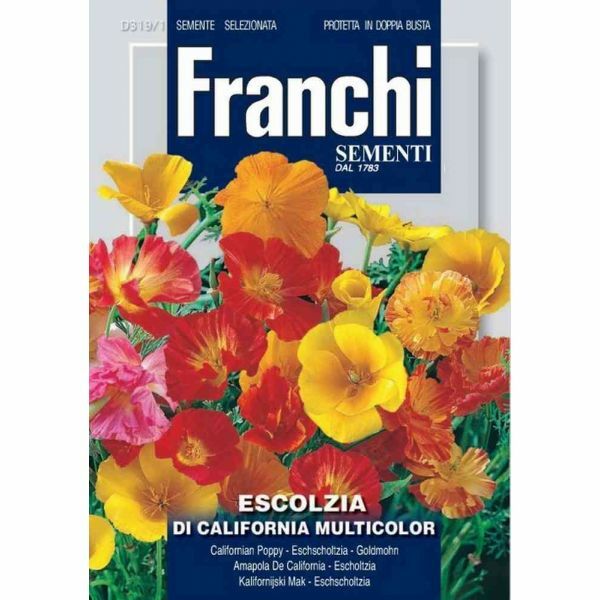
Eschscholzia californica (Bag) – Franchi Sementi
$2.00
1g
19
People watching this product now!
Description
Additional information
| Brands |
Franchi Sementi |
|---|
Related products
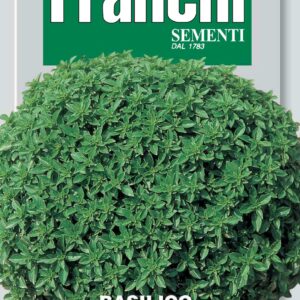
Basil Fine Verde Greek (Ocimum basilicum L.) (Bag) – Franchi Sementi
*Heritage Variety*
This is a mid-early variety producing bushes variety with small leaves and quite a strong flavor. This variety is easy to grow, especially in containers.
Super for making good basilly sauces and with Red Pear Franchi tomatoes.
Approximate seeds quantity:@4000.
To be sow from March to July directly on the ground and inside the rest of the year.
Basil Fine Nano Compatto a Palla (formerly Greco a Palla). This is a beautiful plant, a bush variety with a naturally round shape. It has small, bright green leaves. The flavor is intense and holds up well in tomato dishes. Use for flavoring or just leave some on a plate or in a jar in the kitchen for aroma and color.
It can be grown in a large pot. For transplants, start 5-6 seeds in a cell six or seven weeks before set out date which is ten or more days after last frost date. Thin to three or four. Set plants 12 inches apart. For direct seeding, 7-8 seeds every foot, thin to two or three. 5 gram packet, about 3,000 seeds.
Basil has approximately 600-650 seeds per gram.
1g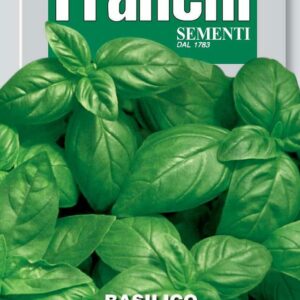
Basil Italiano Classico (Ocimum basilicum L.) (Bag) – Franchi Sementi
Italian Classic Basil. This sweet Genovese basil is our most popular variety. It is the same strain that made pesto famous worldwide. (Our Italian supplier, Franchi Seeds, calls it Italian Classic rather than Genovese because the region of Genoa got an Indicazione Geografica Protetta (IGP) trademark that limits the use of the name Genovese to basil grown in a certain area of Liguria; however, the seed is grown elsewhere in Italy and so cannot have the name Genovese within Italy. )
Whatever this basil is called, it's the best. This is the classic basil used for sauces, pesto, pizza, and just about everything else. Leaves are soft and fragrant with a delicious taste.
The seed count in a pack is enormous -- about 4,800 seeds. Why so much seed? Because in Italy, people like to pick basil very young, so they seed it repeatedly and just pull the entire plants when they are about 5-6 inches tall. In the U.S., most people grow a few plants and pick from them all summer long, so a packet of seeds lasts a long time. Basil seed, if kept cool and dry (but not in the refrigerator) will remain viable for up to 5 years. Try one of our seed storage tins for keeping extra seed.
Basil has approximately 600-650 seeds per gram.
FUSARIUM FREE - TESTED.
*Heritage Variety*
Basil Classico Italiano - This is the classic style basil which is also used for making 'pesto' but has a million other uses in the kitchen. The ideal windowsill herb too.
This is a mid-early variety producing vigorus plants. Easy to grow and perfect for containers.
Approximate seeds quantity: @4000 seeds.
To be sow from March to July directly on the ground and inside the rest of the year.
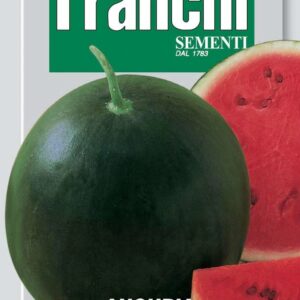
Watermelon Sugar Baby (Citrullus lanatus Thunb.) (Bag) – Franchi Sementi
This is an Early variety producing round fruit of medium size. The skin is consistent thick and of a dark green colour. The flesh is sugary and of an intense red colour.
To be sow from March to June and harvest from July to September.
Approximate seeds quantity: @60 seeds.
Sugar Baby is an heirloom variety, introduced in 1956, that has remained popular because of its compact size and sweet flavor. It is considered an icebox melon because the fruits are small enough to fit in the icebox, or what we call a refrigerator. The melons are round with dark green, smooth skin and finely textured red flesh. It is one of the sweetest watermelons you can grow. The melons weigh 8-10 pounds and are about 8 inches across. Vines are long, running to 12 feet. Plants should be spaced 4 feet apart. Sugar Baby is one of the earliest melons to mature, requiring about 75 days from planting. Each plant should produce two or three melons. 6 gram packet = 150 seeds. Approximately 6-20 seeds per gram.
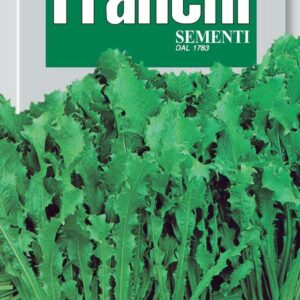
Endive Romanesco (Bag) – Franchi Sementi
Endive Riccia Romanesco da Taglio. A cut and come again endive from Rome. Thin serrated dark green leaves with classic endive taste and texture. Space at 4" between plants, 8" between rows. 40-45 days. Plant grows in a small upright bunch which is easy to harvest. You can also just broadcast seed it trying to get seeds every inch or two and cut it when it gets three/four inches high. Simple to grow and good resistance to bolting. Best for spring and fall but will work at any time throughout the growing season. Perfect for that Roman salad you remember. Can also be cooked. 60 or so days for full size. 10 gram pack. Approximately 900 seeds per gram.
*Heritage Variety*
L40 - Endive Romanesco da Taglio: Roman cutting endive with thin, jagged upright leaves that grow in small bunches. This is a very easy variety to grow and use and it has a long sowing season. Dont be tempted to sow them in the spring along with your other lettuces, you wont get very good results. Its an endive, not a lettuce, even if it looks more like a lettuce. They need heat initially to germinate and start their journey, and then cold to develop. Most varieties are very hardy and will tolerate sub-zero. There are several varieties of escarole and endive; the open-headed ones should be tied up about seven to ten days before harvest to blanch the heart and make them tender. Or you can just stick a bucket on top and, when you harvest that head, move the bucket to the next one. Be lazy – use an elastic band. Be even lazier and plant them closer than the standard 20 cm apart, so they all bunch up and blanch themselves.
Sow: from April to October
Harvest May to mid December.
Approximate seeds quantity: @5600 seeds.
Partnership plant: Tomato, Leek.
What to sow after: Cauliflower & Cabbage, Cucumber, Bean,
Aubergine, Melon, Pepper, Pea, Tomato, Radish, Courgette.